
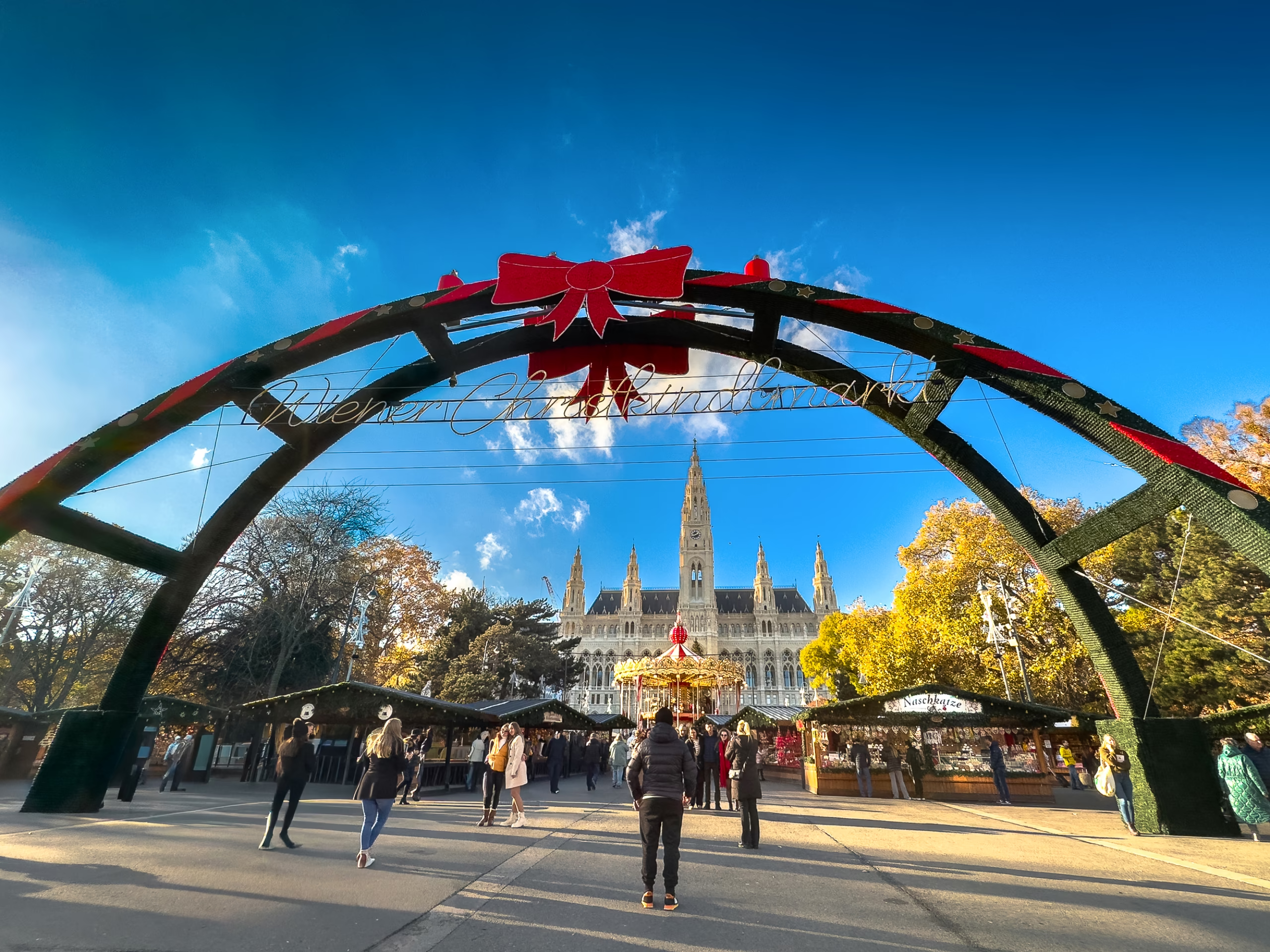
Vienna winter is the magical season for cultural and slow travelers. The historic Austrian capital sparkles beautifully and shines brilliantly during the cold winter months.
Paul and I (Marilee) find Vienna in winter to be a storybook setting. Whether the forecast calls for sun, fog, rain, or snow, this refined and cultured European city takes our breath away.
Her imperial history, rich culture, beautiful nature, and meaningful traditions invite us to visit Vienna during winter time and again.
So, we created this complete travel guide for you to visit Vienna’s magical season.
We’re sharing our favorite experiences and firsthand perspective of the best things to do, see, and celebrate in winter.
In addition to our original photographs and wholehearted recommendations, you’ll further find our custom maps and travel tips to help you plan your own Vienna winter trip.
Ready? Bundle up, and let’s go!
- Things to Do in Vienna in Winter: Christmas Markets
- Viennese Christmas Market on City Hall Square (Wiener Christkindlmarkt)
- Viennese Christmas Market on Rathausplatz: Opening Times
- Christmas Village on St. Stephen’s Square (Weihnachtsdorf Stephansplatz)
- Christmas Village on Stephansplatz: Opening Times
- Old Viennese Christmas Market on Freyung (Altwiener Christkindlmarkt)
- Old Viennese Christmas Market on Freyung: Opening Times
- Things to Do in Vienna in Winter: Winter Markets
- Things to Do in Vienna in Winter: Palaces
- Things to Do in Vienna in Winter: Museums
- Things to Do in Vienna in Winter: Performing Arts
- Things to Do in Vienna in Winter: Churches
- Things to Do in Vienna in Winter: Viennese Coffee Houses
- Vienna Winter Sports: Outdoor Adventures
- Vienna Winter Parks and Pools (Thermal Spa)
- Vienna Winter Travel Tips
- Vienna Weather November to March
- What to Wear in Vienna in Winter
- Vienna Winter in Conclusion
- Vienna Map with Districts
- Vienna Map with Attractions
- Vienna Winter Sources and Resources
- Check Out More Recommendations
- Vienna Winter FAQs
When you book or purchase through some links, Spotlight Sojourns may earn a small commission at no extra cost to you. Thanks for using our affiliate links!
Vienna Map with Districts
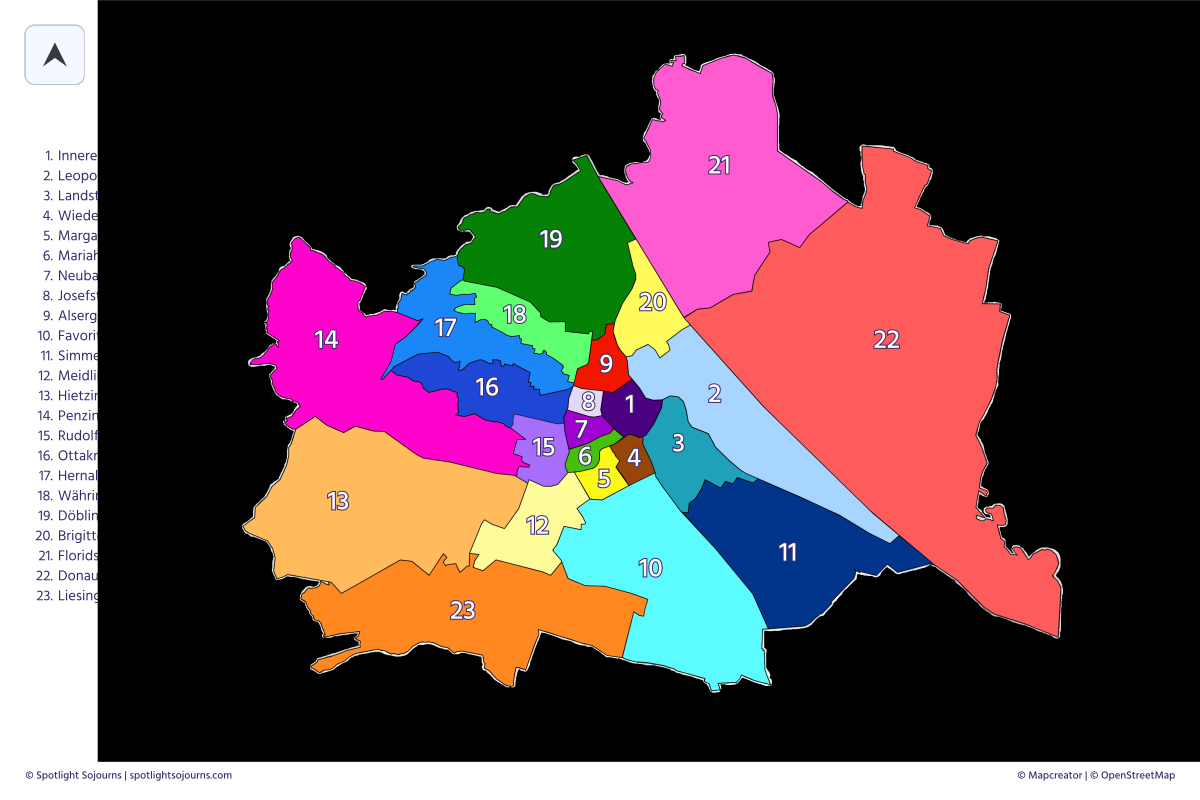
The Vienna winter magic reveals seasonal delights across the entire city, which itself encompasses 23 municipal districts, or neighborhoods.
The 23 Vienna districts start with the 1st District of Innere Stadt, and end with the 23rd District of Liesing.
The fabled First District is considered the very best of the best areas to stay in Vienna. Not only for its leading luxury hotels, but also for its amazing array of main attractions within walking distance.
However, each district has its own Christmas markets, not to mention things to do, sights to see, and places to eat, shop, play, and stay.
Each neighborhood has its own vibes, too, whether that’s palatial and posh, hip and contemporary, or low key and family friendly.
To assist your Vienna winter wanderings to different neighborhoods, Paul has created this custom Vienna map with districts.
Later, you’ll find his custom interactive map with attractions, destinations, and locations in this article.
(PS: In case you’re wondering, “Who’s Paul?” Paul is Spotlight Sojourns’ mapmaker, photographer, and FAA-certified, FAA-licensed drone pilot.)
Things to Do in Vienna in Winter: Christmas Markets
Vienna traces its festive season celebration to December 1296, when Albrecht I decreed a one-day Nativity Market (Krippenmarkt). The Krippenmarkt is the first recorded Christmas market in Europe.
More than seven centuries later, Vienna’s Advent and Christmas markets (Weihnachtsmärkte) remain a vital and vibrant part of this UNESCO World Heritage City.
These festive celebrations are, we believe, among the reasons why The Economist has proclaimed Vienna the World’s Most Livable City on multiple occasions.
The Advent markets and Christmas villages typically open in early winter, i.e., mid-to-late November until late December. Some run until the end of the year, while others remain open through the first week of January.
Of course, you’ll want to visit the best Viennese Christmas Markets.
If your Christmas season schedule allows, then we suggest visiting two or three of these magical Christmas markets.
But if your travel itinerary is tight, then the Viennese Christmas Market on City Hall Square is THE place to be.
Viennese Christmas Market on City Hall Square (Wiener Christkindlmarkt)
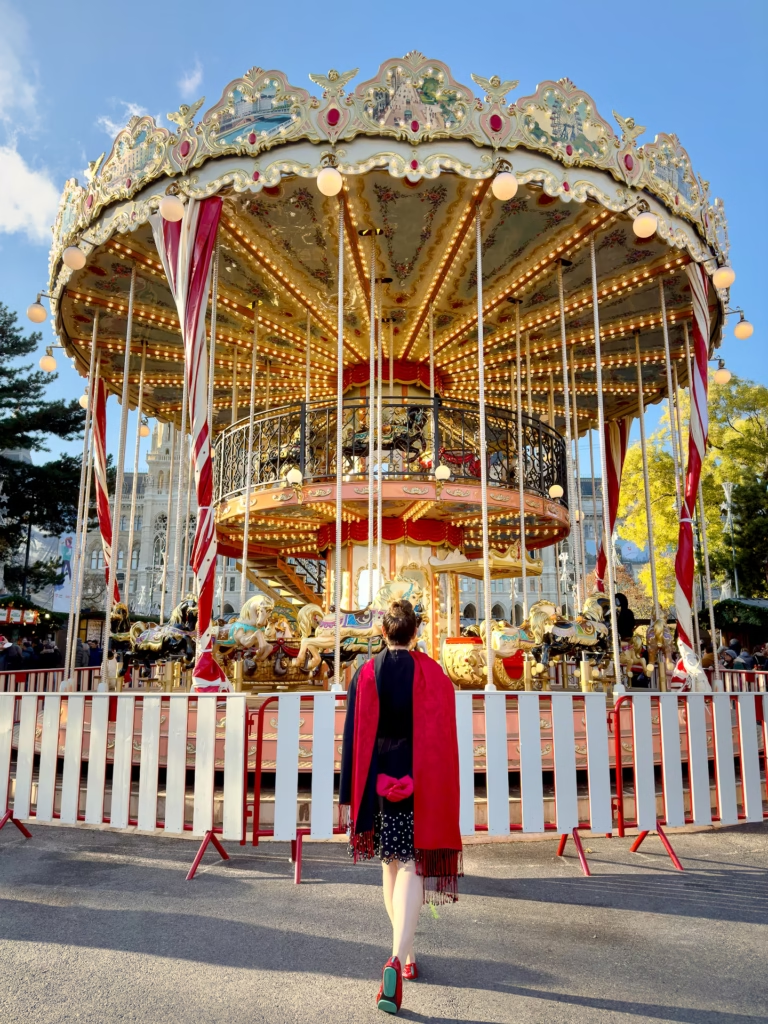
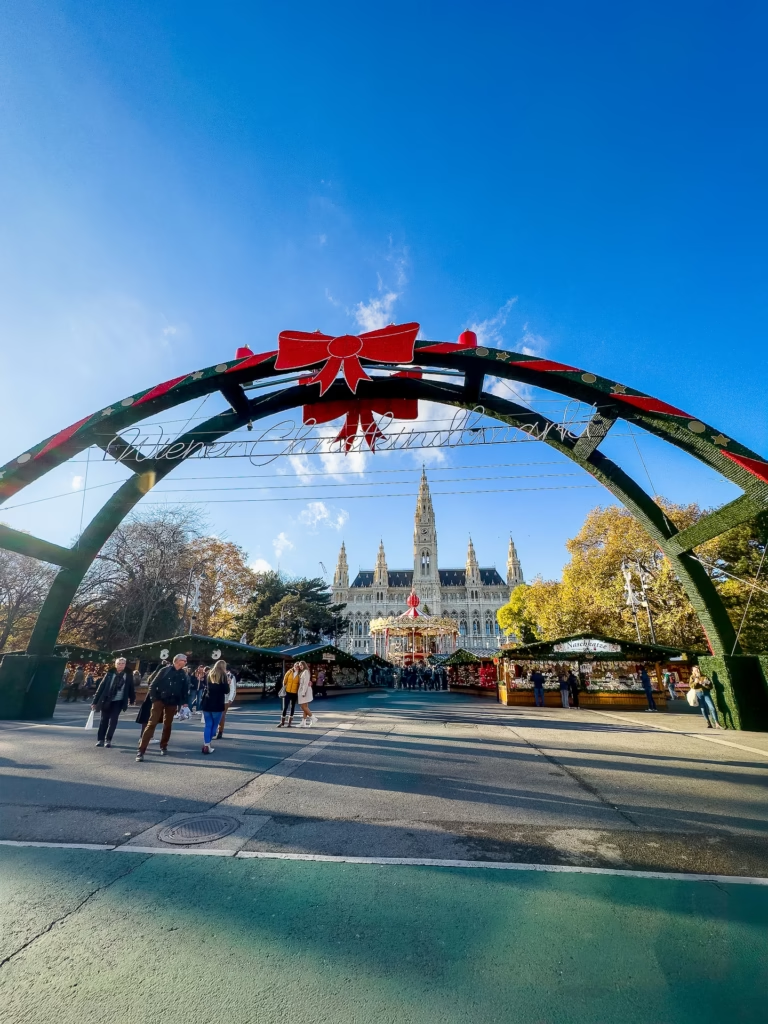
The Viennese Christmas Market (Wiener Christkindlmarkt) in City Hall Square (Rathausplatz) is Vienna’s official holiday celebration since 1975.
Being that it’s the capital’s official event, the Viennese Christmas Market is obviously the biggest market, complete with the best backdrop: Vienna City Hall.
Vienna City Hall (Rathaus), a glorious 19th-century neo-Gothic landmark, creates a spectacular setting for these premier Christmas festivities.
You’ll discover instagrammable photo spots everywhere you turn. You’ll want to capture a keepsake shot with these quintessential sights:
- Illuminated entrance arch facing the front of City Hall.
- The largest Christmas tree in Vienna, a towering annual tribute from the Austrian provinces.
- Colorful two-tiered carousel, a classic Christmas tradition.
The Small Viennese Ice Dream (Kleiner Eistraum) outdoor skating rink is a favorite thing to do at this perennially popular and packed Christmas market.
After the Viennese Christmas Market closes on St. Stephen’s Day, December 26th, the Small Viennese Ice Dream remains open during the first week of January.
Later in January, the entire Rathausplatz transforms into a magical winter wonderland. Keep reading for all the essential enchantment!
Speaking of Vienna City Hall: Free audio guides in English and other languages are available for a self-guided walking tour of this landmark. You’ll inquire at the City Information office on the ground floor.
Viennese Christmas Market on Rathausplatz: Opening Times
The Viennese Christmas Market on Rathausplatz opens on November 14th, 2025, and closes on December 26th, 2025.
The Small Viennese Ice Dream on Rathausplatz opens on November 14th, 2025, and closes on January 6th, 2026.
Address: Viennese Christmas Market on City Hall Square (Wiener Christkindlmarkt) | Rathausplatz | 1010 Vienna, Austria
Christmas Village on St. Stephen’s Square (Weihnachtsdorf Stephansplatz)
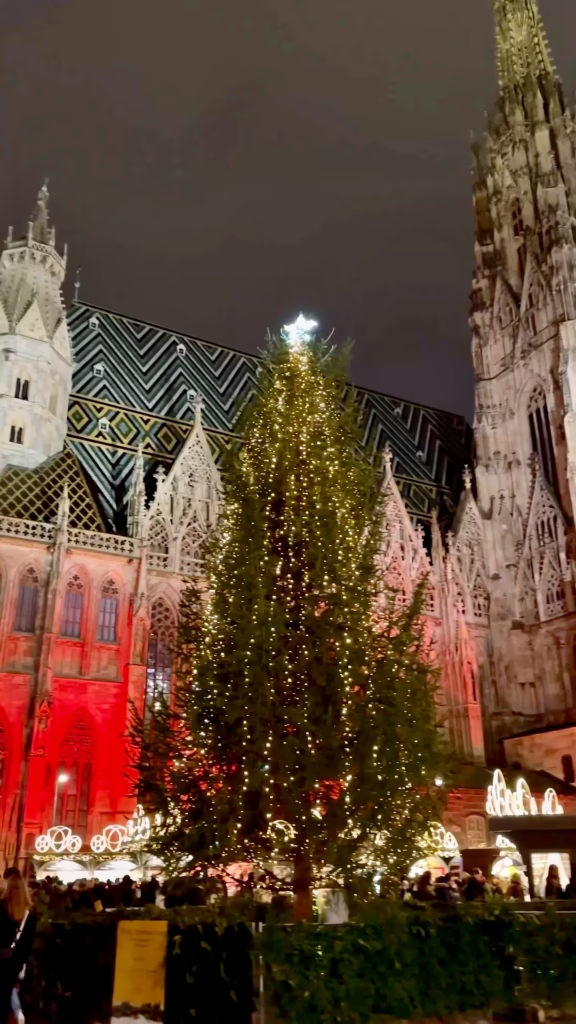
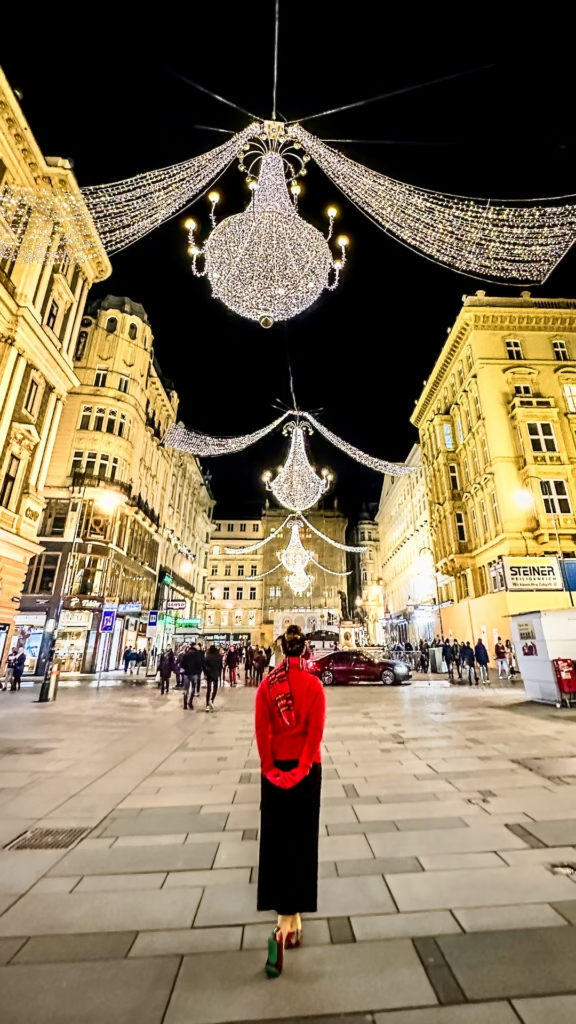
Celebrate the season at the splendid Christmas Village on St. Stephen’s Square (Weihnachtsdorf Stephansplatz).
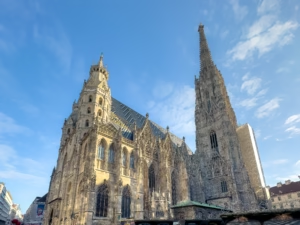
Since the Middle Ages, St. Stephen’s Cathedral (Stephansdom) has remained resilient through centuries of turmoil and triumph. The Gothic cathedral stands tall as the proud symbol of the capital and the nation.
The Gothic-inspired ambiance includes scintillating Christmas decorations, sparkling Christmas lights, and a stately Christmas tree.
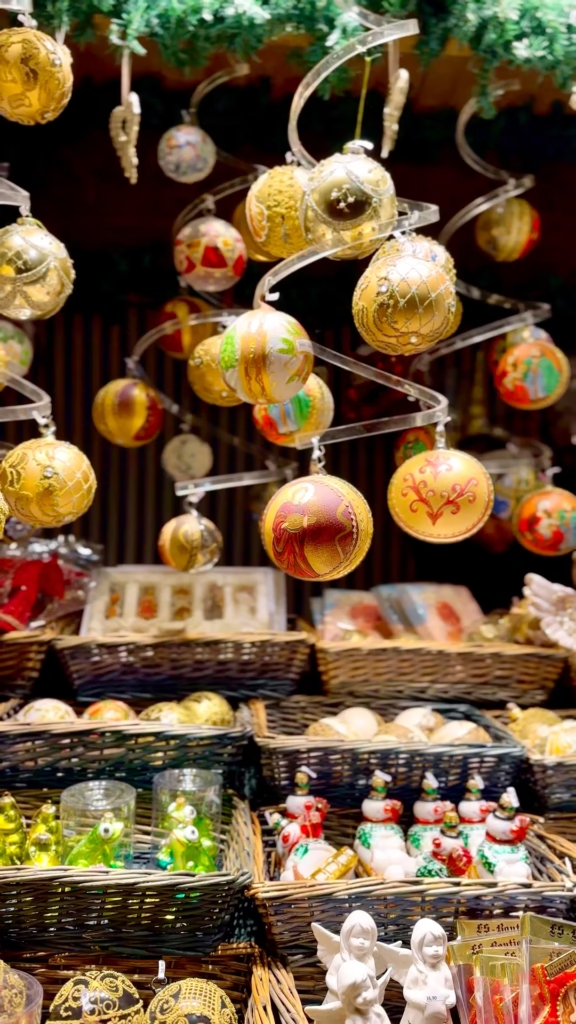
Elegant market stalls entice with gifts both sacred and secular. High-caliber toys offer enduring quality and unique designs.
The hand-crafted Christmas ornaments here are particularly collectible.
Christmas Village on Stephansplatz: Opening Times
The Christmas Village on Stephansplatz opens on November 8th, 2025, and closes on December 26th, 2025.
Address: Christmas Village on St. Stephen’s Square (Weihnachtsdorf Stephansplatz) | Stephansplatz | 1010 Vienna, Austria
Old Viennese Christmas Market on Freyung (Altwiener Christkindlmarkt)
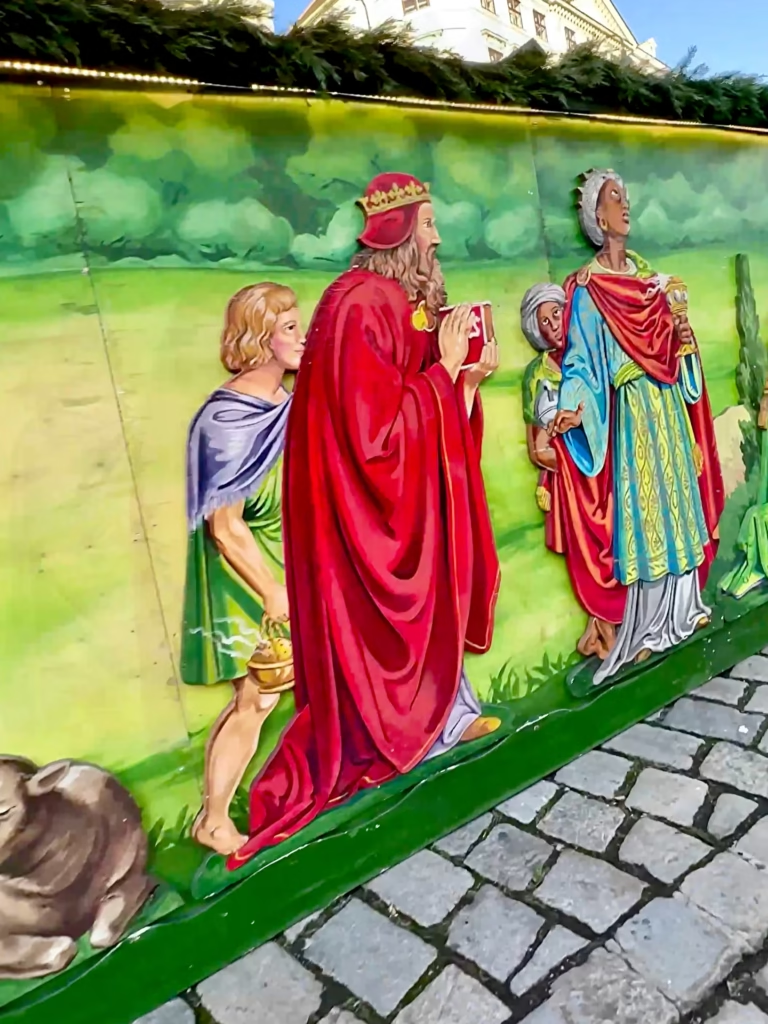
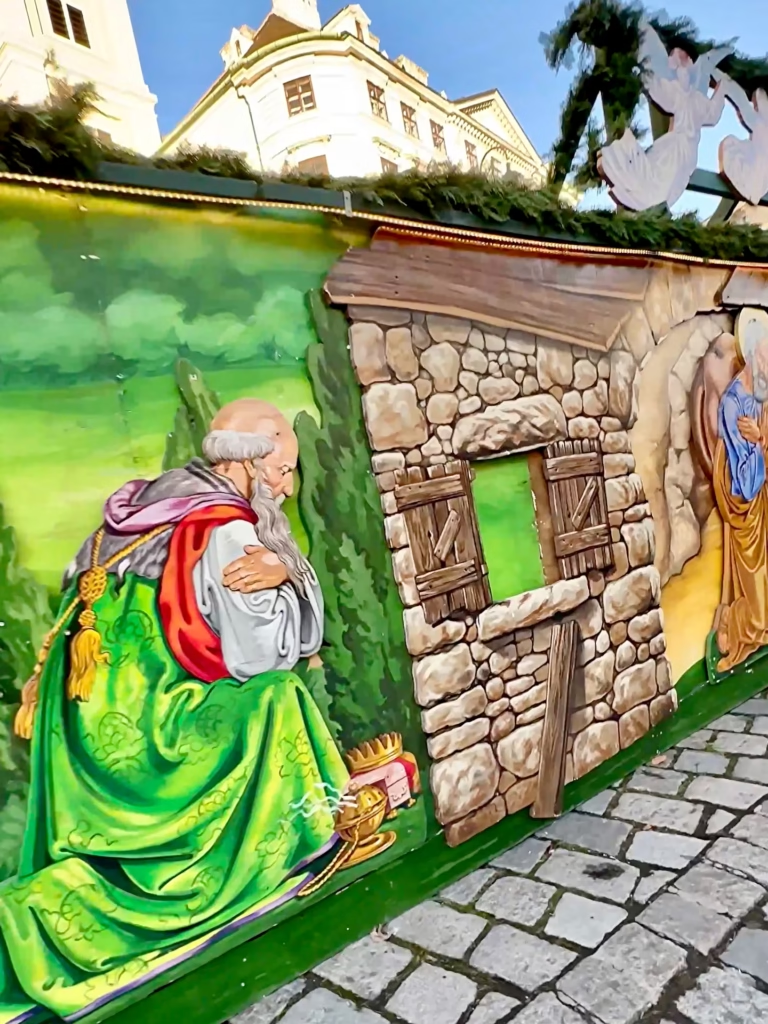
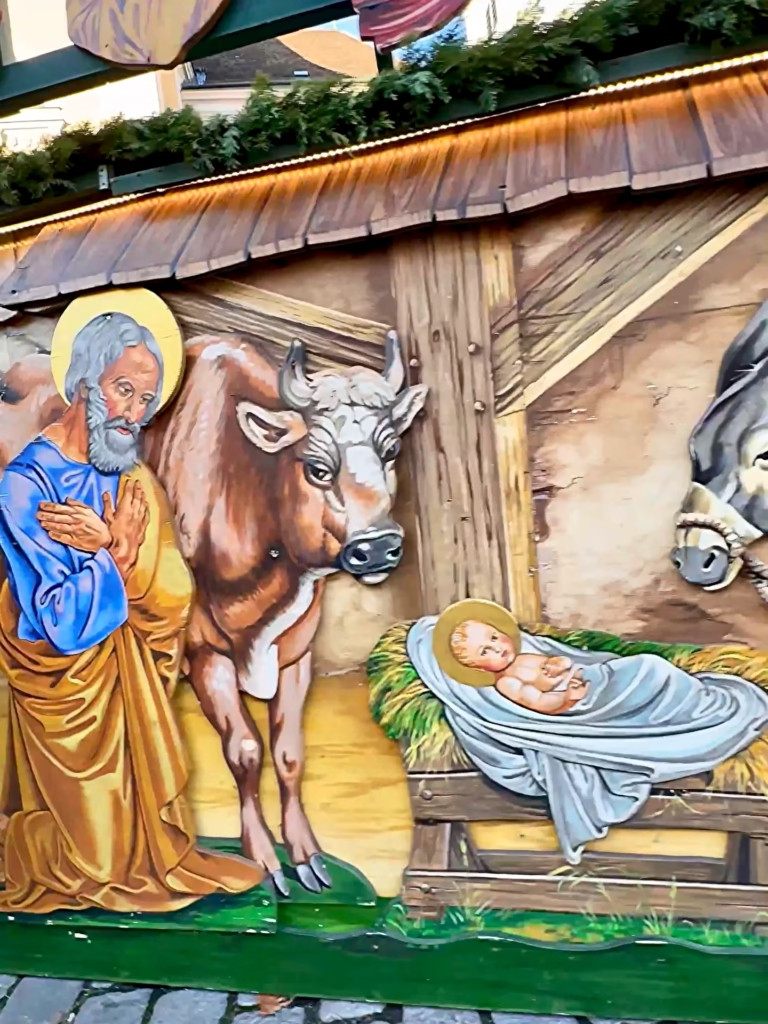
Dating from 1772, the Old Viennese Christmas Market (Altwiener Christkindlmarkt) on Freyung is the oldest Christmas market in Vienna.
This traditional Advent market is quiet and cozy, a nice contrast to larger Christmas markets.
Alongside the quaint wooden market stalls selling handicrafts and culinary treats, a farmers’ market presents fresh local produce and regional foods.
Also, you’ll want to see the charming hand-painted Nativity scene extending 150 feet (46 m) along the outer boundary. Facing the street, the story of the Holy Family and Christ Child Jesus is told sweetly and meaningfully.
Old Viennese Christmas Market on Freyung: Opening Times
The Old Viennese Christmas Market on Freyung opens on November 15th, 2025, and closes on December 23rd, 2025.
Address: Old Viennese Christmas Market (Altwiener Christkindlmarkt) | Freyung | 1010 Vienna, Austria
Things to Do in Vienna in Winter: Winter Markets
Winter Market at Riesenrad Square (Wintermarkt Riesenradplatz)
Another tradition at Prater Vienna is the Winter Market on Riesenrad Square (Wintermarkt am Riesenradplatz).
The Winter Market at Riesenradplatz runs from mid-November to early January.
Numerous market and food stalls sell hand-crafted gifts, charming toys, and traditional treats.
At night, the Prater really comes alive to the musical stylings of “Prater Rocks!” Winter Concert Series.
Live music performances are held outdoors on Wednesday through Sunday nights. Concerts on Christmas Eve, New Year’s Eve, and New Year’s Day have special programming.
New Year’s Day features the big-screen live broadcast of the Vienna Philharmonic New Year’s Concert, as you’ll read later.
Admission to the Winter Market and Winter Concerts is always free for everyone. Yes, even the New Year’s Eve event is free.
So grab a mug of hot chocolate, non-alcoholic hot punch, or traditional Glühwein mulled spiced wine.
Gluhwein is deliciously spiced with cinnamon, cloves, anise, orange, and sugar. You can also enjoy this traditional winter beverage with non-alcoholic wine.
Then don your warm winter coat and put on your boogie shoes!
Prater Winter Market at Riesenradplatz: Opening Times
The Prater Winter Market at Riesenrad Square opens on November 21st, 2025, and closes on January 6th, 2026.
Prater Winter Concerts at Riesenrad Square begin on November 21st, 2025, and end on January 6th, 2026.
Concert performances are held Wednesdays through Sundays, from 7:00 pm to 8:30 pm (19:00 to 20:30).
Christmas Eve, New Year’s Eve, and New Year’s Day Concerts are the exceptions.
Concert scheduling for Christmas Eve, New Year’s Eve, and New Year’s Day is as follows:
- December 24th, 2025, Christmas Eve Concert from 1:00 pm to 3:00 pm (13:00 to 15:00).
- December 31st, 2025, New Year’s Eve Concert from 8:00 pm (20:00) to 2:00 am (02:00) on January 1st, 2026
- January 1st, 2026, New Year’s Day live broadcast of the Vienna Philharmonic Orchestra Concert starting at 11:00 am (11:00).
Address: Prater Winter Market at Riesenrad Square (Wintermarket Riesenradplatz) | Prater Wien | Riesenradplatz 2 | 1020 Vienna, Austria
Things to Do in Vienna in Winter: Palaces
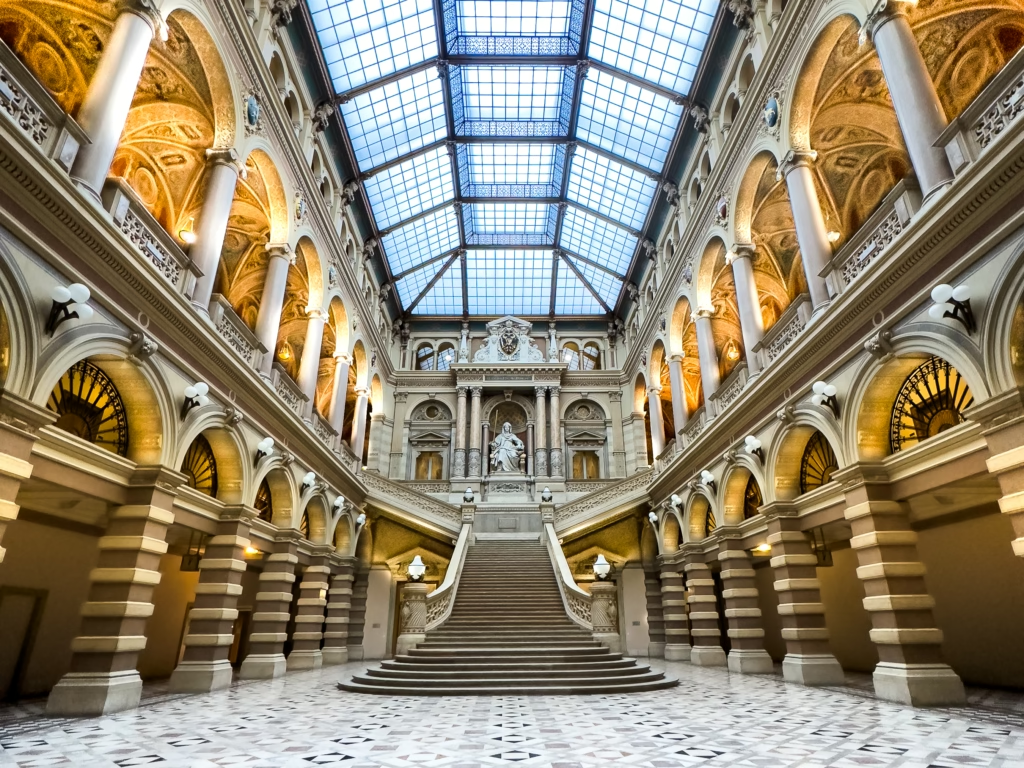
Vienna’s palaces are among the best places to explore, experience, and enjoy Austria’s imperial splendors in winter.
Hofburg Palace (Hofburg Wien)
Ever since the medieval age, the Hofburg (Hofburg Wien) has reigned supreme.
Formerly, the Hofburg served as the sovereign seat of vast imperial power. Presently, the palace serves as the seat of the modern Austrian federal government.
From this majestic complex in the First District of Innere Stadt, Vienna Inner City, the imperial dynasty reigned over the Holy Roman Empire and the Empire of Austria.
The original 13th-century fortified castle developed over centuries of architectural expansion into the magnificent multi-faceted complex that’s the Hofburg today.
So let’s explore some of the top attractions of the Hofburg Palace.
Address: Hofburg Palace (Hofburg Wien) | Heldenplatz | 1010 Vienna, Austria
Imperial Apartments (Kaiserappartements) and Sisi Museum
One of the three top tourist attractions in Vienna, the Imperial Apartments (Kaiserappartments) and Empress Sisi Museum reveal the authentic imperial lifestyle, luxury, and lavishness.
Imperial artifacts, attire, artwork, and accouterments bring to life the legendary history and powerful stories of royal courts.
This is majesty at the highest level, both in the sumptuous public places and also behind the scenes.
You’ll visit the opulent staterooms, dining room, and private spaces of Empress Maria Theresa, Emperor Franz Joseph, and Empress Elisabeth, the beautiful, beloved, but tragic Sisi.
A special highlight of the Imperial Apartments is Sisi’s own exercise room. She had this private gym installed at her express request, and she exercised faithfully.
Address: Imperial Apartments (Kaiserappartements) and Empress Sisi Museum | Michaelerplatz | 1010 Vienna, Austria
Imperial Treasury (Kaiserliche Schatzkammer Wien)
The Imperial Treasury (Kaiserliche Schatzkammer Wien) holds the priceless Austrian Crown Jewels and imperial coronation robes.
Secular splendors and sacred treasures, significantly, the reputed albeit disputed Holy Grail, additionally round out this glittering exhibition of the Habsburg Empire’s unfathomable wealth.
Address: Imperial Treasury (Kaiserliche Schatzkammer Wien) | Hofburg, Schweizerhof | 1010 Vienna, Austria
Spanish Riding School (Spanische Hofreitschule)
Established in 1572, the Spanish Riding School (Spanische Hofreitschule) is the world’s oldest and most distinguished riding school.
The long military traditions and deep connections between these purebred horses and their humans are fascinating.
Guided walking tours of this aristocratic equine facility provide a greater understanding of this UNESCO Intangible Cultural Heritage.
The white Lipizzan stallions and the expert equestrians regularly present precise dressage performances set to classical music in the 18th-century Winter Riding School.
Special Note: Please be aware that the Spanish Riding School performances offer only standing room in the Winter Riding School arena.
Address: Spanish Riding School (Spanische Hofreitschule) | Michaelerplatz 1 | 1010 Vienna, Austria
Austrian National Library (Österreichische Nationalbibliothek)
The Austrian National Library (Österreichische Nationalbibliothek) is the largest Baroque library in Europe. Its collections contain over 200,000 volumes.
The sublime State Hall and Library currently gleam after an impeccable cleaning, conservation, and restoration work in 2022.
In addition, the Library hosts rotating exhibits and permanent collections in the Literature Museum, Globe Museum, Papyrus Museum, and Esperanto Museum, as well as the House of Austrian History.
Address: Austrian National Library (Österreichische Nationalbibliothek) | Josefsplatz 1 | 1010 Vienn, Austria
Schönbrunn Palace (Schloss Schönbrunn)
In the summertime, the Habsburg rulers and their royal families resided at Schoenbrunn Palace (Schloss Schönbrunn).
The allure of this imperial estate in the warmer months is understandably irresistible. That’s why Schönbrunn Palace is one of the top three attractions in Vienna overall.
Yet the regal enchantment remains equally irresistible during the colder months of winter. That’s why Schoenbrunn Palace is one of the best things to do when visiting Vienna in winter.
The Rococo Palace, together with the Baroque Gardens, is a UNESCO World Heritage Site.
The palace and gardens are inseparable in their Outstanding Universal Value, to quote UNESCO, “Gesamtkunstwek, a masterly fusion of many art forms.”
On this immense estate, the four most popular attractions remain open in the winter season from early November to late March:
- Grand Tour with private apartments of Empress Maria Theresa, Emperor Franz Joseph, and Sisi, Empress Elisabeth
- Schönbrunn Zoo, the oldest zoo in the world
- Desert House
- Palm House
The unparalleled imperial elegance then continues into the evening hours with dinners and classical music concerts at Schoenbrunn.
Schönbrunn Palace also hosts one of the finest Christmas markets in Vienna, which is family-friendly and admission-free.
Preserving centuries of imperial heritage intact, Schonbrunn Palace is indeed a must-see for both first-time visitors and Austrians alike.
Address: Schloss Schönbrunn Palace | Schönbrunner Schlossstraße 47 | 1130 Vienna, Austria
Things to Do in Vienna in Winter: Museums
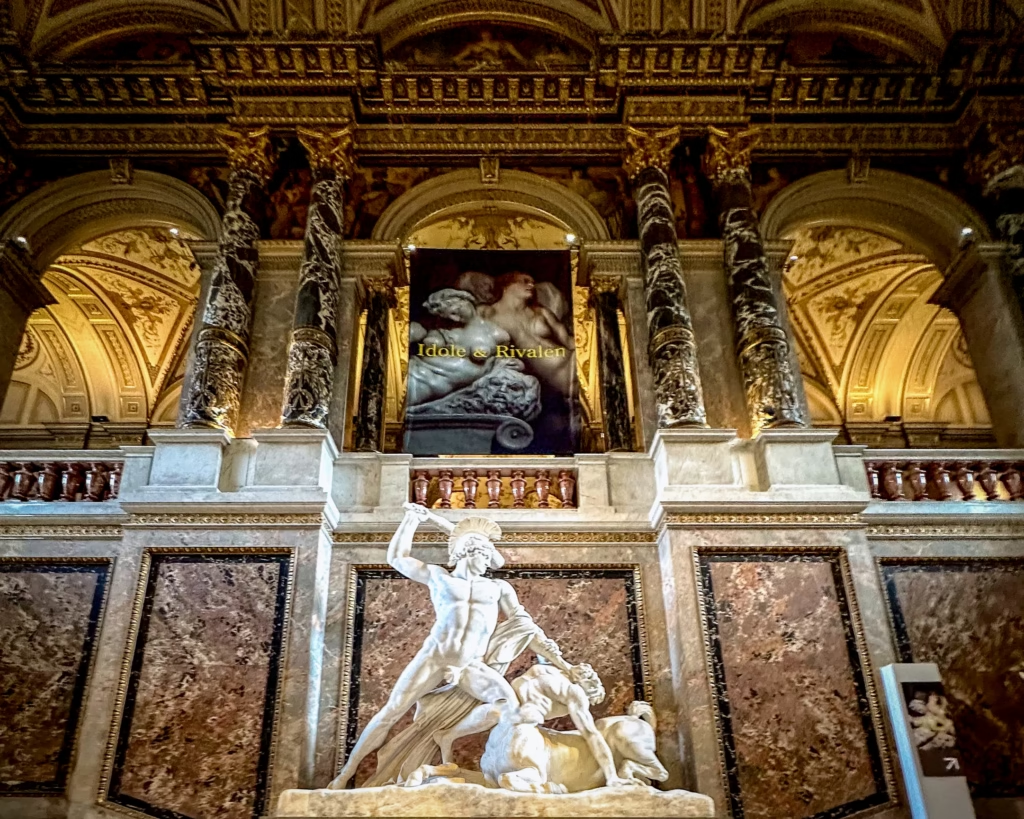
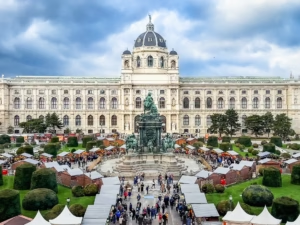
Flanking Empress Maria Theresa’s memorial fountain in Maria Theresa Square (Maria-Theresien-Platz), two magnificent imperial museums seem to mirror each other.
The Vienna Art History Museum (Kunsthistorisches Museum Wien) and the Natural History Museum (Naturhistorisches Museum Wien) both date from the late 19th century.
Their premier collections, gathered from around the world, were once the private delight of the imperial rulers.
Their majestic twin domes soar 200 feet (60 m) in the air. The Grand Staircases in both museums make for very instagrammable photos.
However, the Art History Museum and the Natural History Museum differ in purpose, scope, and focus.
Special Note: The Kunsthistorisches Art History Museum and the Naturhistorisches Natural History Museum are undertaking a significant redesign and reconstruction. This major project is anticipated to take several years.
For this reason, the famous Christmas Village on Maria-Theresia Square will remain closed for the Christmas 2025 and Christmas 2026 events. However, the museums are expected to stay open to visitors.
Art History Museum (Kunsthistorisches Museum Wien)
Opened in 1891, the Vienna Art History Museum (Kunsthistorisches Museum Wien) spans thousands of years of international art history.
The art collections range from ancient Greek and Roman antiquities to Renaissance masterpieces to early 20th-century masterworks.
The Ancient Egyptian and Near Eastern collections are also impressive.
The Art History Museum Cafe serves delicious bites and beverages in the circular Dome Hall. This glamorous cafe under a gorgeous dome is arguably the most beautiful cafe in Vienna.
Address: Art History Museum (Kunsthistorisches Museum Wien) | Maria-Theresien-Platz | 1010 Vienna, Austria
Natural History Museum (Naturhistorisches Museum Wien)
The Vienna Natural History Museum (Naturhistorisches Museum Wien) is “dedicated to the kingdom of nature and its explorations.”
Fossils, minerals, meteorites, anthropologists, and scientists fill the remarkable research museum.
You won’t want to miss the Venus von Willendorf, dating back to the Paleolithic era.
This diminutive celebrity is modest in height, standing a mere 4.3 inches (11.1 cm) tall. Nonetheless, she is mighty in stature and star power.
Address: Natural History Museum (Naturhistorisches Museum Wien) | Maria-Theresien-Platz | 1010 Vienna, Austria
Belvedere Palace (Schloss Belvedere)
The Belvedere Palace (Schloss Belvedere) earns global acclaim for its illustrious collection of Gustav Klimt artwork, the largest in the world.
The Baroque landmark comprises not one but two separate palaces: Upper Belvedere and Lower Belvedere. Plus the Orangery, Palace Stables, and the famed Belvedere Gardens.
While Klimt’s masterpiece The Kiss draws you — and all the crowds, understandably — to the second floor of Upper Belvedere, do take time to explore the entire complex.
You’ll discover masterworks from the Medieval Ages to the Viennese Modernism of the 20th century.
The masterful artists include not only renowned Austrians such as Egon Schiele and Edvard Munch but also lesser-known yet equally talented artists.
Belvedere’s terraced gardens feature seasonal levels of loveliness all year round.
Fresh blooms and flowing fountains of warm weather yield a different beauty in cold weather.
On a winter trip, the garden statuary and shrubbery especially stand out in stark elegance.
During the festive season, a merry Christmas Village at Belvedere Palace (Weihnachtsdorf Schloss Belvedere) opens in front of the Upper Belvedere entrance.
A museum entry ticket isn’t necessary to visit the Christmas village, of course. But
Address: Belvedere Palace (Schloss Belvedere) | Prinz-Eugen-Strasse 27 | 1030 Vienna, Austria
Museums Quarter (MuseumsQuartier, MQ)
Vienna’s past, present, and future meet in the contemporary cultural district Museums Quarter (MuseumsQuartier Wien), also known as MQ.
Formerly the imperial court stables, Museums Quarter opened in 2001 as an international cultural phenomenon of blockbuster proportions.
Since then, the 7th District of Neubau has become one of the hippest and hottest Vienna districts to see, be seen, and, of course, stay.
You’ll find major cultural institutions, smaller exhibition centers, and studios galore comprise MQ’s dynamic diversity.
Music, theater, dance, fashion, photography, street art, children’s art, art galleries, and artists-in-residence flourish alongside the bold-face names.
Address: Museums Quarter (MuseumsQuartier, MQ) | Museumsplatz 1 | 1070 Vienna, Austria
Things to Do in Vienna in Winter: Performing Arts
Vienna is a veritable heaven on earth for performing arts aficionados, especially classical music lovers.
Famous composers such as Mozart, Schubert, Beethoven, Chopin, Wagner, Brahms, Mahler, and Strauss lived, worshipped, created, and conducted here in Vienna.
Indeed, although Chopin is most closely associated with Paris, he chose Vienna for his debut performance.
The following are the most fabulous and favorite places to enjoy Vienna’s finest performing arts.
Classic Ensemble Vienna
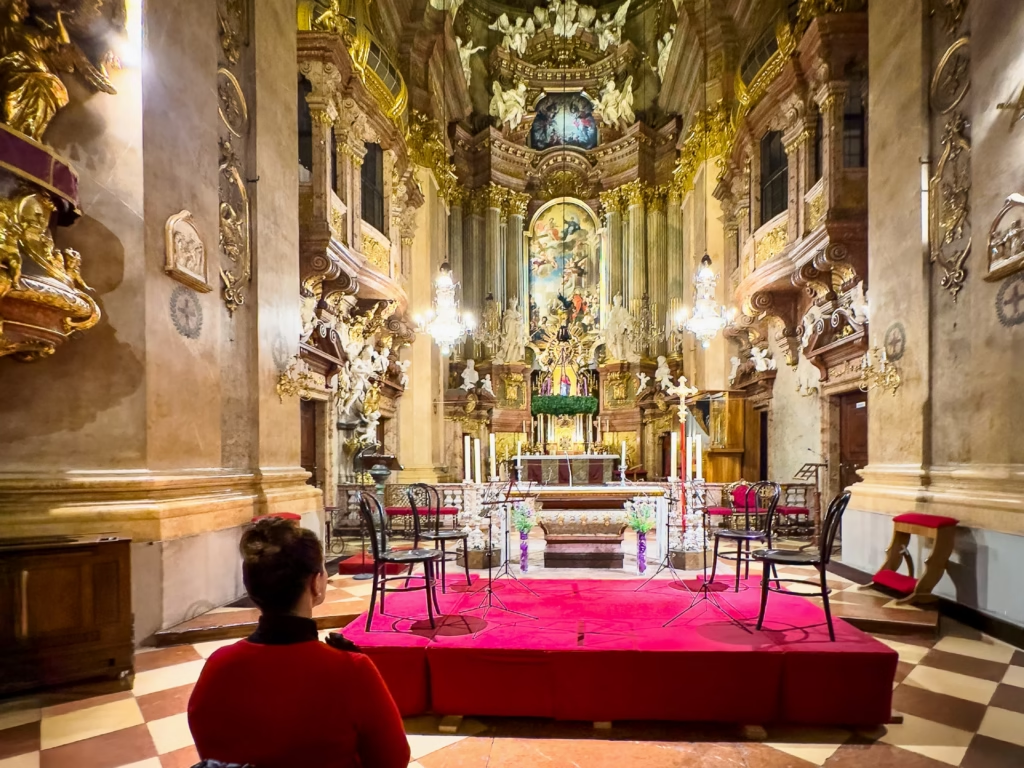
Adorn yourself with musical treasures performed by a superb string quartet in a jewel box of a church.
Concerts at St. Stephen’s Cathedral, Karlskirche, and other churches stir the soul and lift the spirit.
Still, the Classic Ensemble Vienna at St. Peter’s Church (Peterskirche) delivers an intimate ambiance and experience quite unlike any other.
Construction began in 1701 on St. Peter’s Church, a sacred hidden gem in Old Town Vienna.
The fortunate ticket-holders, limited to approximately 50 guests, gasp in hushed awe as they arrive. Well, we, at least, gasped in awe!
Because the Baroque church interior, gilded and domed, gleams in golden hues.
Then, the quartet of professional musicians in formal attire take to the tiny stage. All is silent until bows touch strings in perfect unison.
With all eyes and ears now attuned to the stage — all distractions like phones and cameras promptly put away — the ensemble transports you and your fellow guests on a musical odyssey.
Performing without intermission, the ensemble plays the most memorable works by great composers such as Bach, Beethoven, Mozart, Schubert, and Vivaldi.
Exquisite surroundings, excellent acoustics, and above all, expert musicians create a magical and memorable experience for you.
Address: Vienna Classic Ensemble at St. Peter’s Church (Peterskirche) | Petersplatz | 1010 Vienna, Austria
Vienna Mozart Orchestra (Wiener Mozart Orchester)
Travel back in time to the Golden Age of Music in the Golden Hall (Goldener Saal).
Founded in 1986, the Vienna Mozart Orchestra (Wiener Mozart Orchester) performs the timeless works of Wolfgang Amadeus Mozart in opulent historic costumes.
The much-loved arias, duets, and instrumentals elevate the emotions. While the beautifully be-gowned and be-wigged musicians and singers enchant the eyes.
The singular setting for this one-of-a-kind experience is the Viennese Music Association (Wiener Musikverein) Golden Hall.
This 1870 landmark concert hall features dramatic neoclassical architecture, gleaming golden and burnished burgundy ornamentation, and shimmering crystal chandeliers.
The Mozart concert is an only-in-Vienna evening in the magical Vienna winter.
Address: Vienna Mozart Orchestra (Wiener Mozart Orchester) at Musikverein | Musikvereinsplatz 1 | 1010 Vienna, Austria
Vienna Philharmonic (Wiener Philharmoniker)
Thrill to the power of classical music performed by one of the world’s finest orchestras, the Vienna Philharmonic (Wiener Philharmoniker).
Founded in 1842, the Vienna Philharmonic carries the legacy of European musical traditions into the modern age.
And the Vienna Philharmonic New Year’s Concert is the most coveted, most exclusive ticket in town.
Why is the New Year’s Concert such a coveted and exclusive ticket? Now that’s an excellent question.
Here’s the answer: Because no one may purchase a ticket outright.
Instead, concert tickets are only drawn by lottery after an online application to the Vienna Philharmonic.
Applications to the New Year’s Concert ticket lottery open February 1st and close February 28th.
The New Year’s Concert is a true bucket-list experience, so applying for the ticket lottery surely makes many New Year’s resolution lists.
Later in March, applicants learn whether they’ve won the ticket lottery, either for the New Year’s Concert, the Preview Performance, or the New Year’s Eve Concert.
Besides these lucky lottery winners, everyone else must content themselves with watching the international broadcast.
Fortunately, everyone else can enjoy the Vienna Philharmonic New Year’s Concert at the live broadcast at the Prater Winter Market described earlier.
The free festivities in Riesenradplatz begin on New Year’s Day, January 1st, at 11:00 am.
Address: Vienna Philharmonic (Wiener Philharmoniker) at Musikverein | Musikvereinsplatz 1 | 1010 Vienna, Austria
Vienna State Opera (Wiener Staatsoper)
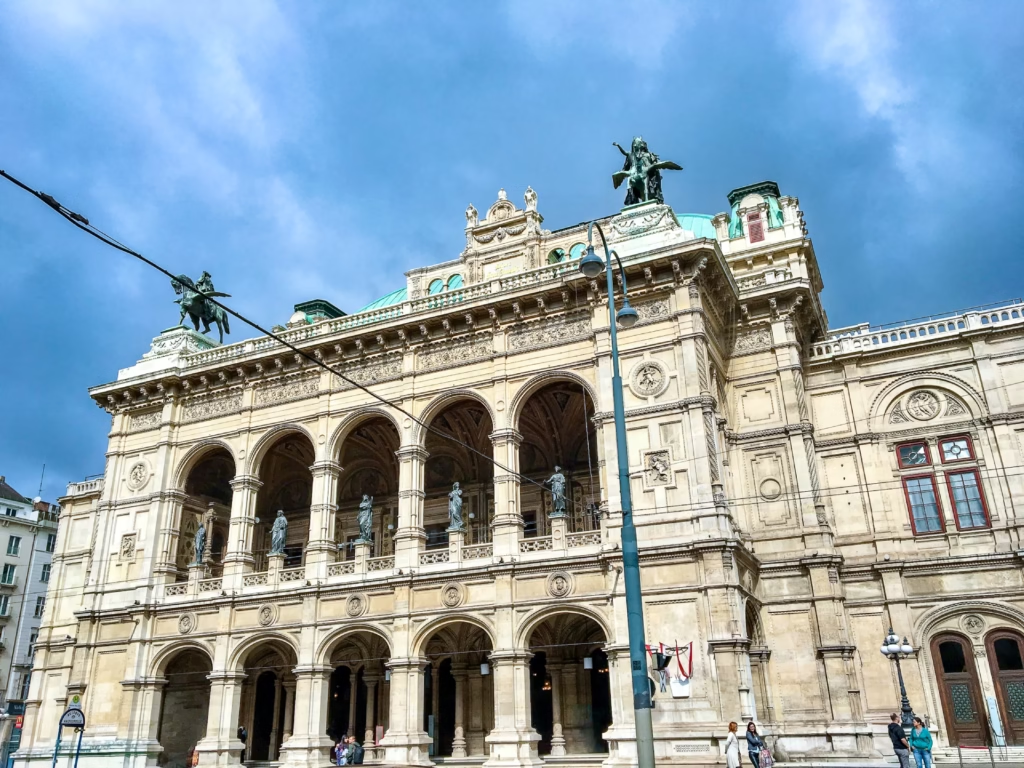
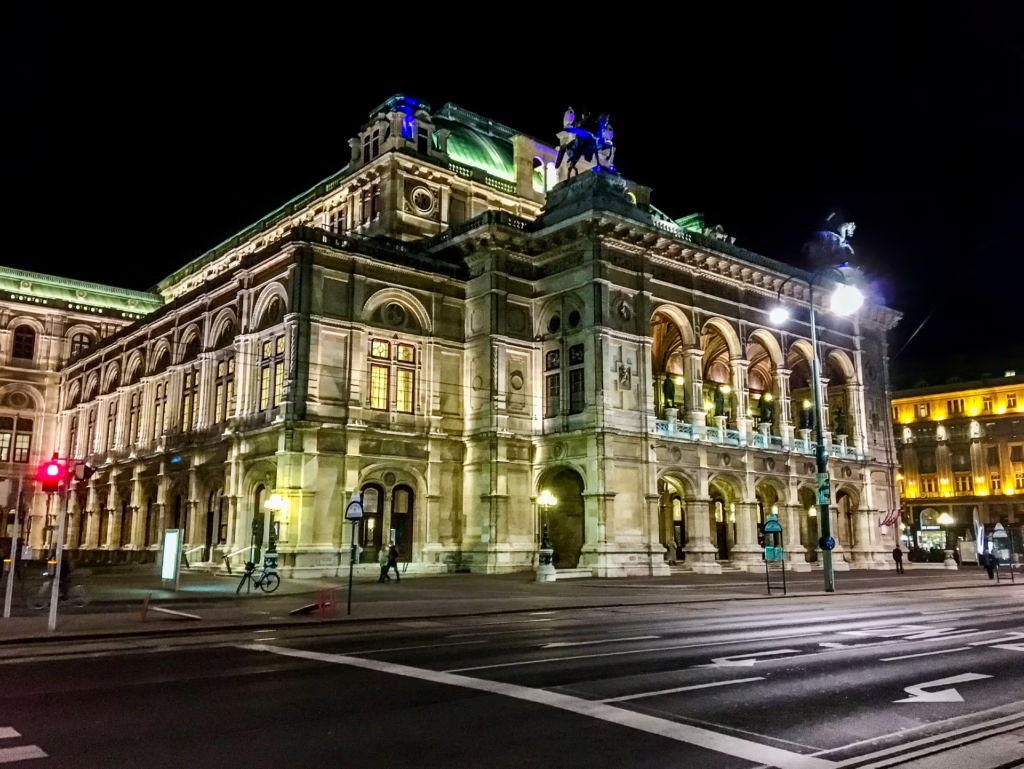
Revel in the wealth of operas and ballets performed in a legendary setting, the Vienna State Opera (Wiener Staatsoper).
Opened in 1869, the monumental architecture of the Vienna State Opera House commands the Ringstrasse.
Its rich repertoire astounds and astonishes both in quantity and in quality,
Not surprisingly, the Vienna Philharmonic auditions and selects its members from those who’ve served tenure in the State Opera Symphony.
The Vienna Opera House additionally hosts the iconic Vienna Opera Ball, a fête without compare on the Viennese social calendar.
This shimmering soire of ballgowns and white-tie tailcoats, of debutantes and escorts, of etiquette and elegance, is a treasured tradition at Carnival time.
Your travel itinerary and social calendar may or may not align with the State Opera, Symphony, or Ballet.
However, you can certainly take a fascinating guided tour of this fabled cultural landmark.
Address: Vienna State Opera (Wiener Staatsoper) | Staatsoper, Opernring 2 | 1010 Vienna, Austria
Things to Do in Vienna in Winter: Churches
St. Stephen’s Cathedral (Domkirche St. Stephan)
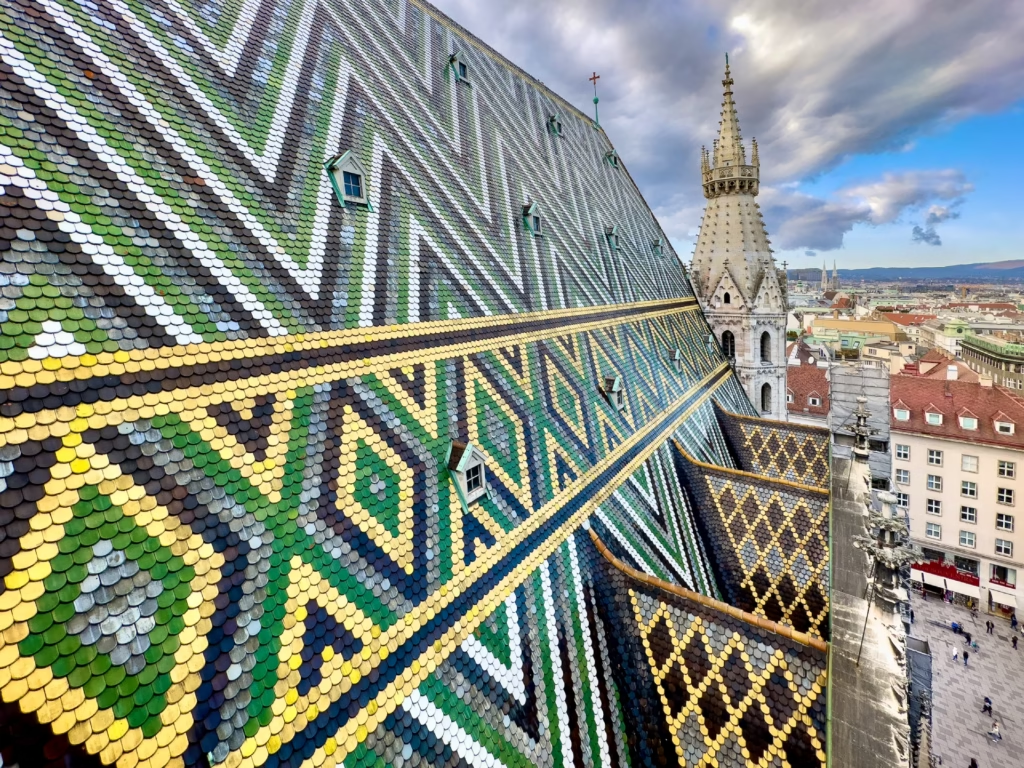
Since the groundbreaking began in the early 12th century on St. Stephen’s Cathedral (Domkirche St. Stephan), Stephansdom has been the symbol of Vienna and the heart of Austria.
Standing resiliently at the geographic center of Vienna, Stephansdom has called the Viennese to service through sermon, music, and song for centuries.
Restoration has repaired the damage of fires, the ravage of wars, and the passage of centuries.
Ongoing preservation work strives to protect and sustain St. Stephen’s Cathedral for future generations.
We wholeheartedly recommend that travelers of faith attend worship services here. It’s an authentic and unforgettable experience of joyful worship, complete with superlative organ and choir.
Otherwise, we highly recommend a guided tour and/or an evening concert at this mighty cathedral.
Additionally, you’ll want to ascend the North Tower or South Tower for panoramic views of Vienna.
To access the North Tower multi-level viewing platform, you’ll take a tiny yet modern elevator.
Step out onto the lofty perch, 224 feet (68 m) high, for an eagle-eye view of the colorful tiles and imperial mosaics on the pitched roof. As well as an up-close look at the powerful bell, Pummerin.
Alternatively, aspire even higher on foot to the loftiest perch, the South Tower. This mighty medieval tower soars 446 feet (136 m) high.
To access the Türmerstube viewing room, you’ll climb 343 steps up a narrow spiral staircase. Afterward, you’ll clamber down those same 343 steps to the ground floor.
Address: St. Stephen’s Cathedral (Stephansdom) | Stephansplatz 3 | 1010 Vienna, Austria
St. Charles Church (Karlskirche)
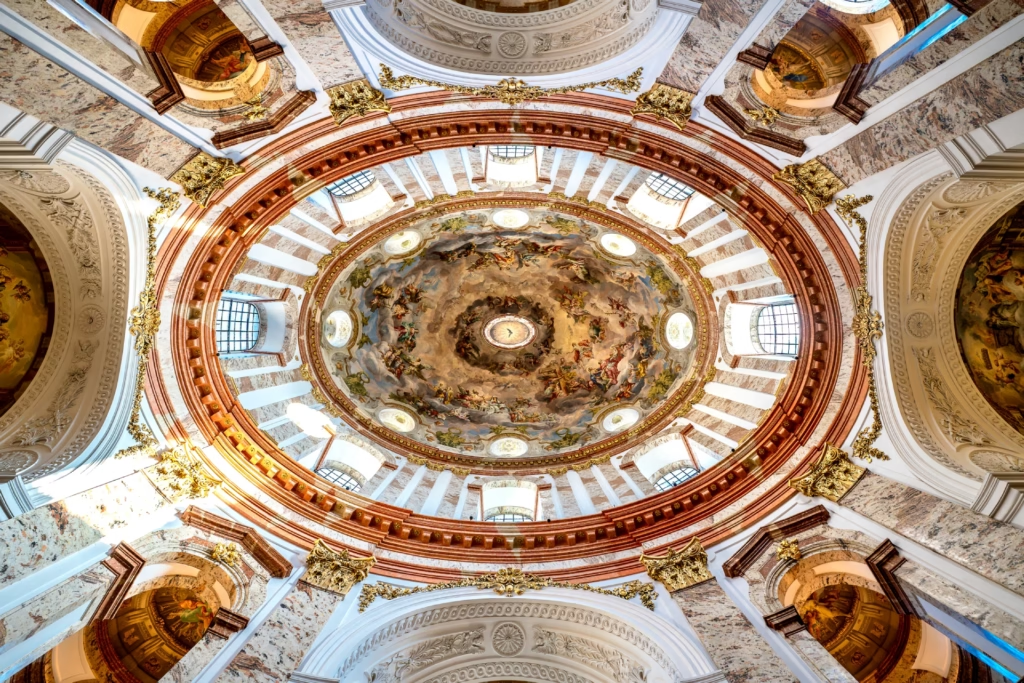
Rising high above Vienna’s southern skyline, St. Charles Church (Karlskirche) invokes awe with its patinated dome, columns, and spires.
The awe-inspiring exterior leads you into an equally inspiring interior of beauty, calm, and repose.
Completed between 1737 and 1739, St. Charles’ Church is dedicated to Charles Borromeo following an earlier plague.
Its aesthetic is markedly distinct from the usual emphatically ornamented Baroque architecture.
Given that lighter touch, the pale palette employed throughout refreshes the eye and the heart.
The frescoed dome first calls your gaze upward in quiet contemplation.
Next, the high altar, expressed solely in white and gold, illuminates all with celestial light.
Then, your visit to the Karlskirche Panoramic Terrace inspires further awe as you gaze upon the city below.
Finally, an evening concert at St. Charles’ Church is yet another opportunity to invoke and inspire awe.
Address: St. Charles Church (Karlskirche) | Karlsplatz | 1040 Vienna, Austria
Things to Do in Vienna in Winter: Viennese Coffee Houses
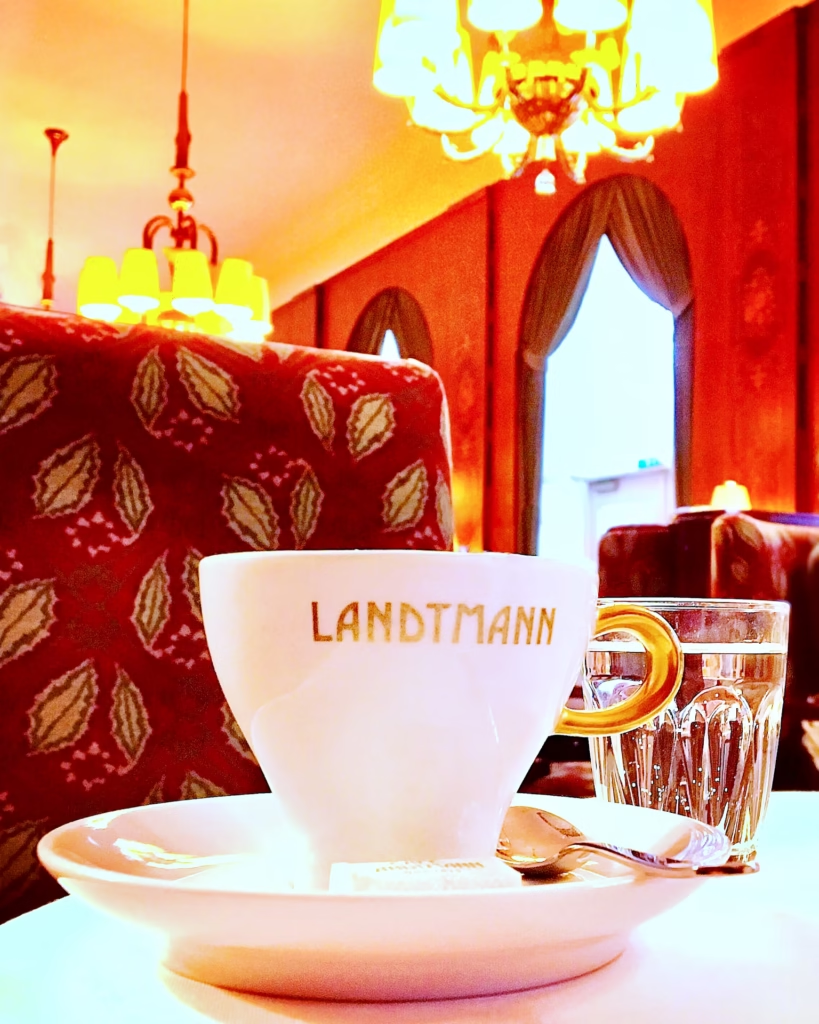
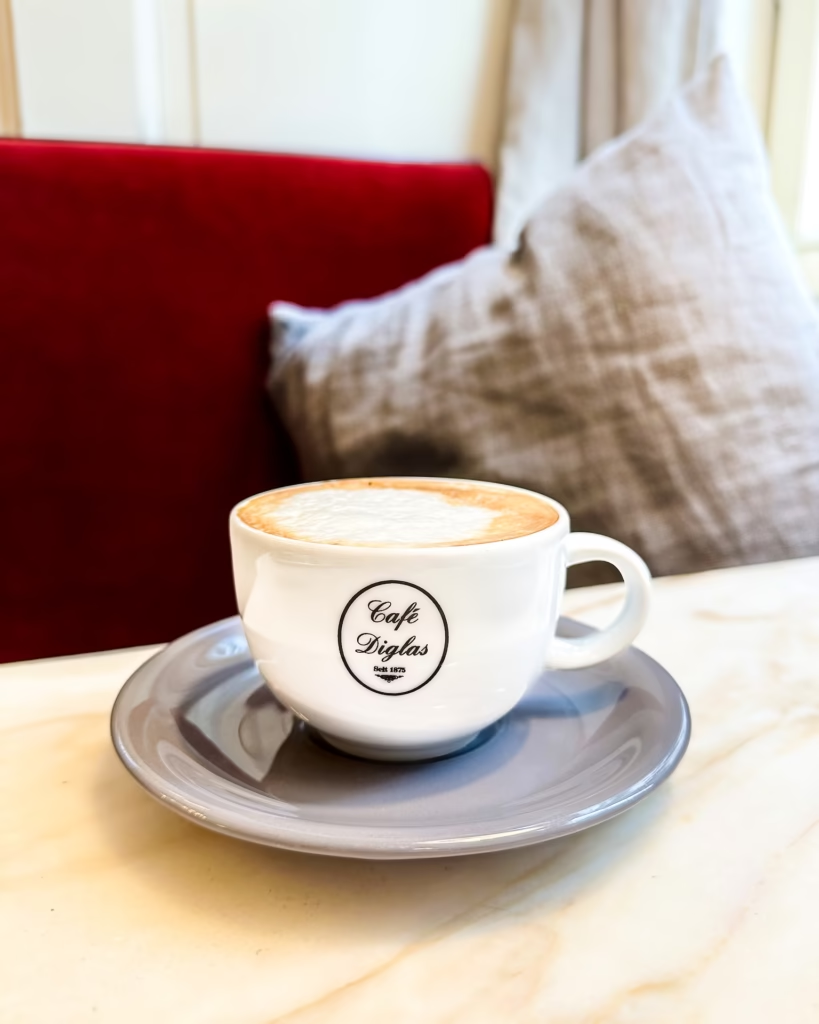
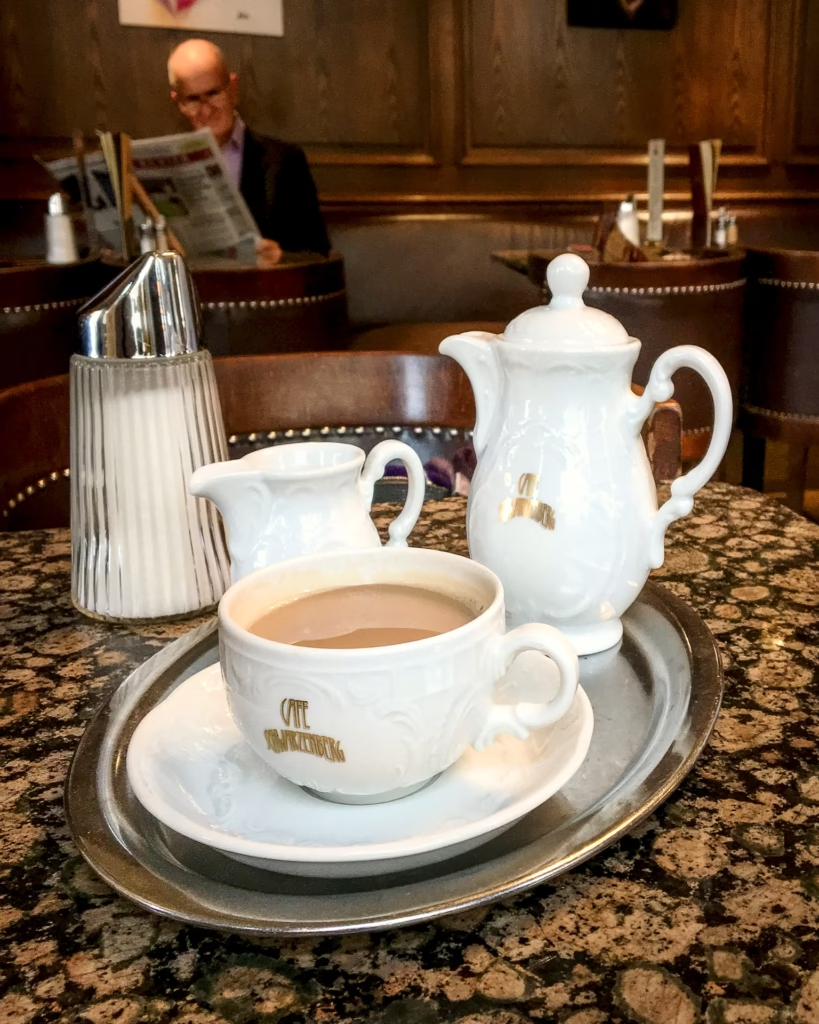
Wintertime is a wonderful time to visit Viennese cafes. Coffee culture and coffeehouses have been indispensable to Viennese life since the 19th century.
So integral are Viennese cafes and cafe culture that UNESCO has designated them as part of Austria’s Intangible Cultural Heritage.
Conversation over a steaming hot melange and a freshly baked pastry surely heads a list of the best things to do in Vienna in winter.
The following are some fabulous historic cafes in the central location of Innere Stadt, the First District.
Discover more of the best cafes in Vienna, including famous coffee houses, historic hidden gems, and modern coffee shops.
Cafe Landtmann
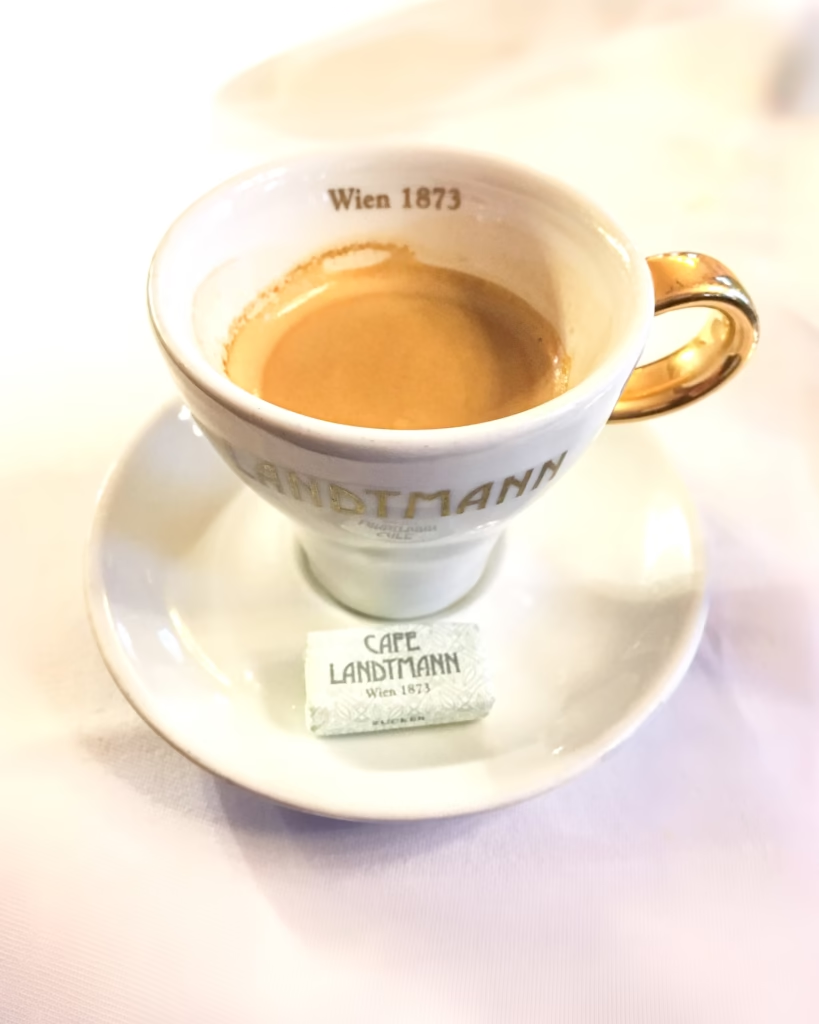
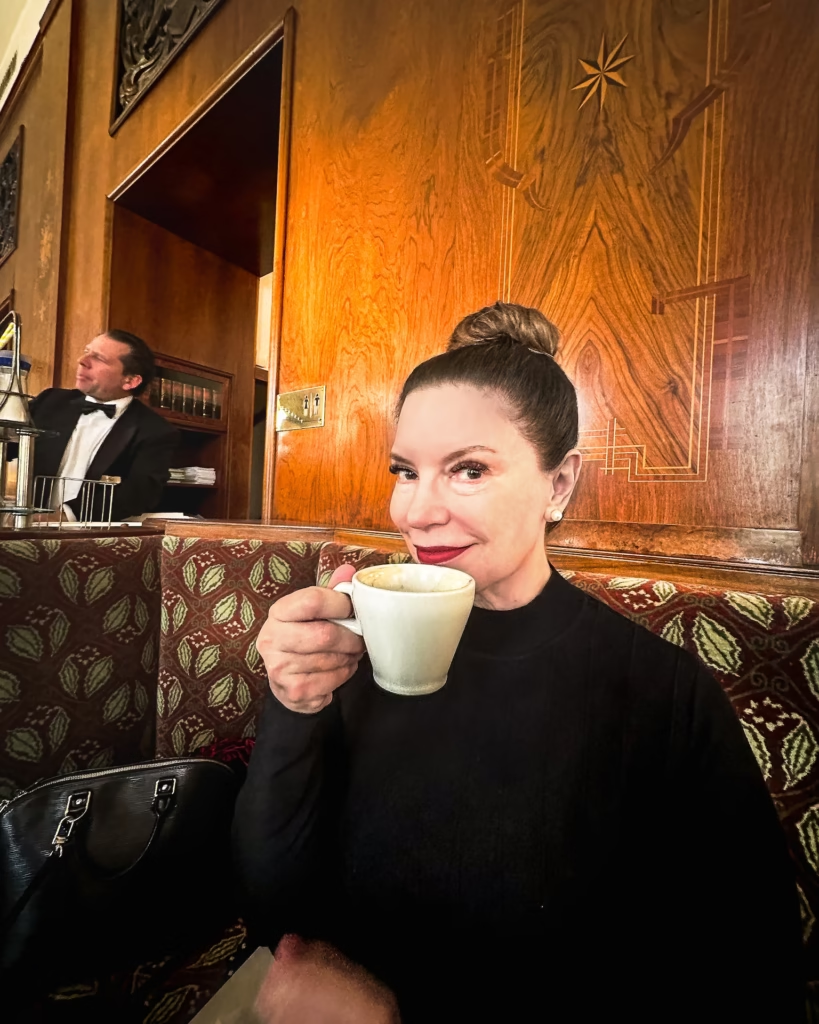
Opened in 1873, Cafe Landtmann is the premier choice for elegant locals and chic travelers alike. It’s considered the best cafe in Vienna overall.
Its location is also premier: A short walk from Rathausplatz, the bustling square in front of City Hall. And mere steps from the Burgtheater, the national theater of Austria.
Cafe Landtmann is the prime place to warm up after visiting the Viennese Christmas Market, ice skating at the Viennese Ice Dream, or taking a scenic winter walk.
Address: Café Landtmann | Universitätsring 4 | 1010 Vienna, Austria
Cafe Central
In 1876, Cafe Central opened and soon became a top spot for the famous and the infamous alike.
Great thinkers such as Sigmund Freud and members of the Vienna Circle discussed philosophy, politics, art, and other important ideas around the marble tables.
Today, many consider Cafe Central to be the most beautiful cafe in Vienna. There’s frequently a queue to enter its elegant interior and gather around its marble tables.
Address: Café Central | Corner Herrengasse and Strauchgasse | 1010 Vienna, Austria
Cafe Hawelka
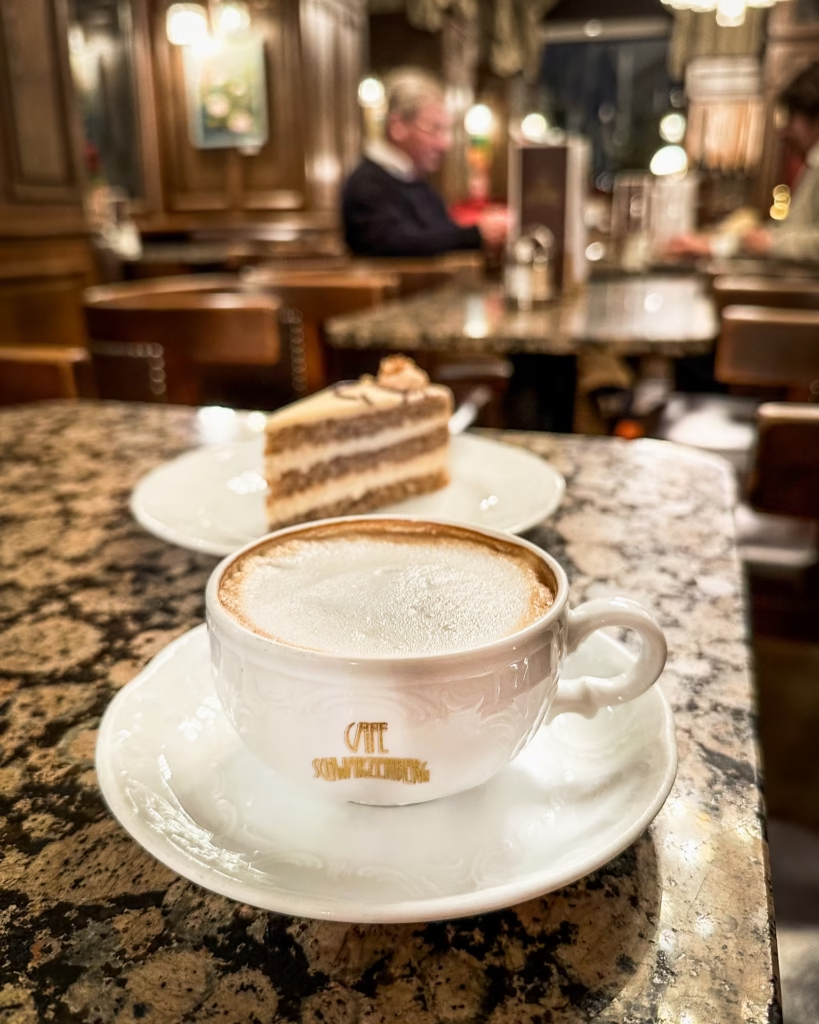
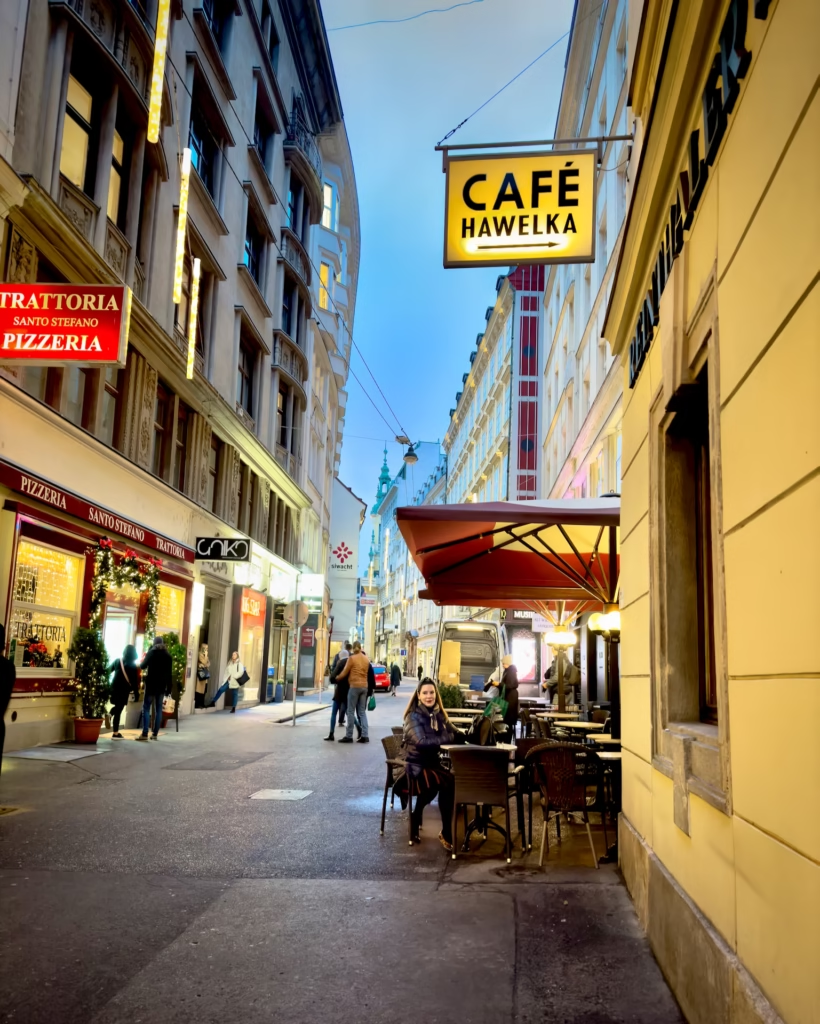
In 1939, Leopold and Josefine Hawelka opened their eponymous cafe. After closing during wartime, they subsequently reopened in 1945.
Authors, artists, intelligentsia, and everyone else gather in its cozy and dark environs. The well-loved and well-worn atmosphere seems unchanged over the decades.
Cafe Hawelka isn’t fancy or formal, but it’s certainly original and authentic.
We suggest the house-made sweet rolls (Buchteln) to accompany your coffee or tea.
For over 60 years, Frau Hawelka herself baked these rolls daily. Today, the next generation of Hawelka family members continues her tasty tradition.
Address: Café Hawelka | Dorotheergasse 6 | 1010 Vienna, Austria
Vienna Winter Sports and Outdoor Adventures
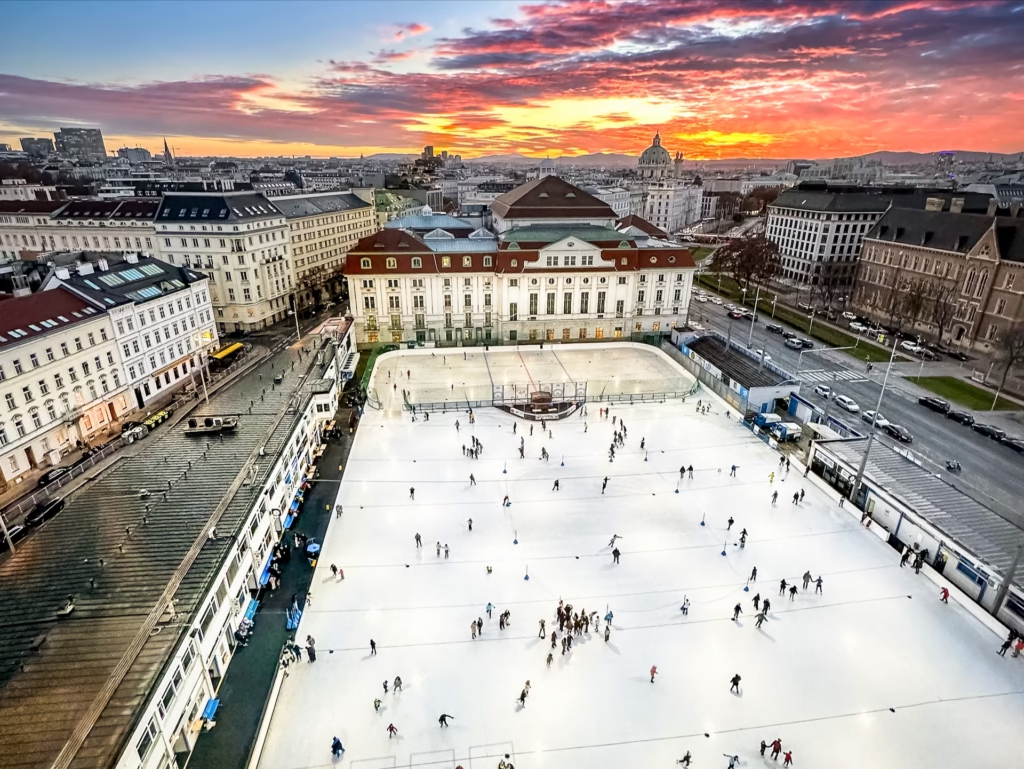
Brisk air, beautiful architecture, and beneficial exercise: Vienna in winter is an urban paradise both for cultural travelers and for outdoor adventurers alike.
Vienna Winter Sports: Ice Skating
During the Vienna winter season, one of the best ways to enjoy Austria’s capital city is ice skating outdoors.
An ice rink open to the views and the fresh air is a real pleasure, whether the sky is grey or sunny.
Ice skating has a long legacy and lore in Viennese history. Ice skating, and in particular, ice dancing, that is, dancing in circular patterns around the ice to music.
UNESCO has inscribed ice dancing on the Austrian Intangible Cultural Heritage List.
Vienna Ice Skating Club (Wiener Eislaufverein)
Since 1867, the Vienna Ice Skating Club (Wiener Eislaufverein) has guided the sport of ice skating in Vienna. The skating association also operates the Vienna winter facility on the Ringstrasse.
Two notable buildings from different eras flank this outdoor skating rink fondly known by the acronym WEV:
On one hand, the 1910s Vienna Concert Hall (Wiener Konzerthaus).
Opened in 1913, the Art Nouveau building serves as the home of several professional music ensembles and music festivals.
On the other hand, the 1960s InterContinental Vienna.
Opened in 1964, this Mid-Century Modern hotel made history as the city’s first skyscraper. It’s still one of the busiest 5-star hotels in Vienna.
WEV opens in late October or early November and runs until early March, or whenever the Vienna winter weather ceases to cooperate.
Hockey, figure skating, ice dancing, speed skating, and curling sessions are available.
The spacious surface can be divided into smaller spaces. These smaller sections focus on private lessons and group training for both children and adults.
And let’s mention the groovy silent disco nights on Fridays. Silent disco on ice turns WEV into the “coolest” dance floor in Vienna, literally!
In addition to skating classes, coaches, and entertainment, the Vienna Ice Skating Club offers skate rentals, checkroom and locker rentals, as well as on-site catering.
Although ice skating is one of the best things to do in winter, this lively location is able to repurpose for year-round use. The area overall is slated for renovation and development soon.
Vienna Ice Skating Club on Ringstrasse: Opening Times
The Vienna Ice Skating Club outdoor skating rink opens on November 8th, 2025.
WEV’s firm closing date has not yet been announced for late February or early March 2026.
Address: Vienna Ice Skating Club (Wiener Eislaufverein, WEV) | Lothringerstrasse 22 | 1030 Vienna, Austria
Vienna Ice World, the Viennese Ice Dream (Wiener Eistraum)
From mid-to-late January until late February or early March, Vienna City Hall transforms the area in front of Rathaus (Rathausplatz) into something extraordinary:
The most beautiful open-air ice-skating experience in the world. A multi-sensory ice-skating extravaganza al fresco.
Vienna Ice World, the Viennese Ice Dream (Wiener Eistraum), covers almost 91,500 square feet (8,500 m2).
Special lighting illuminates several outdoor skating rinks. Including a quiet small rink for little children to learn. And a spectacular two-level terrace overlooking the frozen festivities.
Beyond the beautiful skating rinks, enchanting ice-skating trails called Dream Paths (Traumpfade) curve and carve through Rathaus Park to Burgtheater, all the way to Parliament.
The Viennese Ice Dream skating paths trace approximately 1,640 feet (500 m) in total length.
Surrounded by stunning architecture, inspired by theatrical lighting, and motivated by captivating music, skaters of all ages and abilities glide across the glistening ice.
No ice skates? No problem.
Skates for adults and kids are available for on-site rental. Safety helmets, stand-up skating aids for beginners, skating instruction, and other services support enjoyment for everyone.
In sum, there’s only one time of year and one place in the world where this frozen fairytale comes true.
Vienna Ice World, the Viennese Ice Dream: Opening Times
The Viennese Ice Dream opens on January 22nd, 2026, and closes on March 8th, 2026.
Vienna winter weather and other conditions permitting, of course.
Address: Vienna Ice World, Viennese Ice Dream (Wiener Eistraum) | Rathausplatz | 1010 Vienna, Austria
Vienna Winter Sports: Skiing
Besides ice skating, Austrians rate running, hiking, and skiing among their favorite things to do in the cold season.
Imagine yourself striding happily in an enthusiastic rhythm along the trails and streets of Vienna in winter. Or schussing swiftly down the slopes of the Austrian Alps.
Vienna boasts several cross-country skiing trails within city limits, including the central Prater location in the Second District, Leopoldstadt.
Skiing in the Austrian Alps can also be arranged as full-day trips from Vienna, either via train or motorcoach transportation.
Alpine skiing excursions are further available as all-inclusive guided tours with round-trip transportation.
Vienna Winter Parks and Pools (Thermal Spa)
Prater Vienna (Prater Wien)
Leopoldstadt, the 2nd District between the Danube River and the Danube Canal, hosts the vast oasis of Prater Vienna (Prater Wien) and the Prater amusement park (Würstlprater).
Formerly the imperial hunting grounds, the Prater offers nostalgic attractions, modern amusements, and year-round Fun for all ages.
Yes, you read that correctly: that’s Fun with a capital “F.”
Many amusement rides run from mid-March until the end of October. However, other attractions, for example, Madame Tussaud’s Wax Museum and the Kingdom of Railroads, remain open in winter.
Since 1897, the Prater has been particularly beloved for its Giant Ferris Wheel, Riesenrad.
Riesenrad was built to celebrate Emperor Franz Joseph I’s coronation in the 19th century. Its astonishing scale and iconic structure still define the cityscape in the 21st century.
With fully enclosed and heated wagons, the Giant Ferris Wheel offers breathtaking views from 212 feet (64.7 m) high.
The views from Riesenrad delight and dazzle, especially during the holiday season. When the city sparkles and shines with countless Vienna Christmas lights.
Address: Prater Vienna (Prater Wien) and Prater Amusement Park (Würstlprater) | Riesenradplatz 2 | 1020 Vienna, Austria
City Park (Stadtpark)
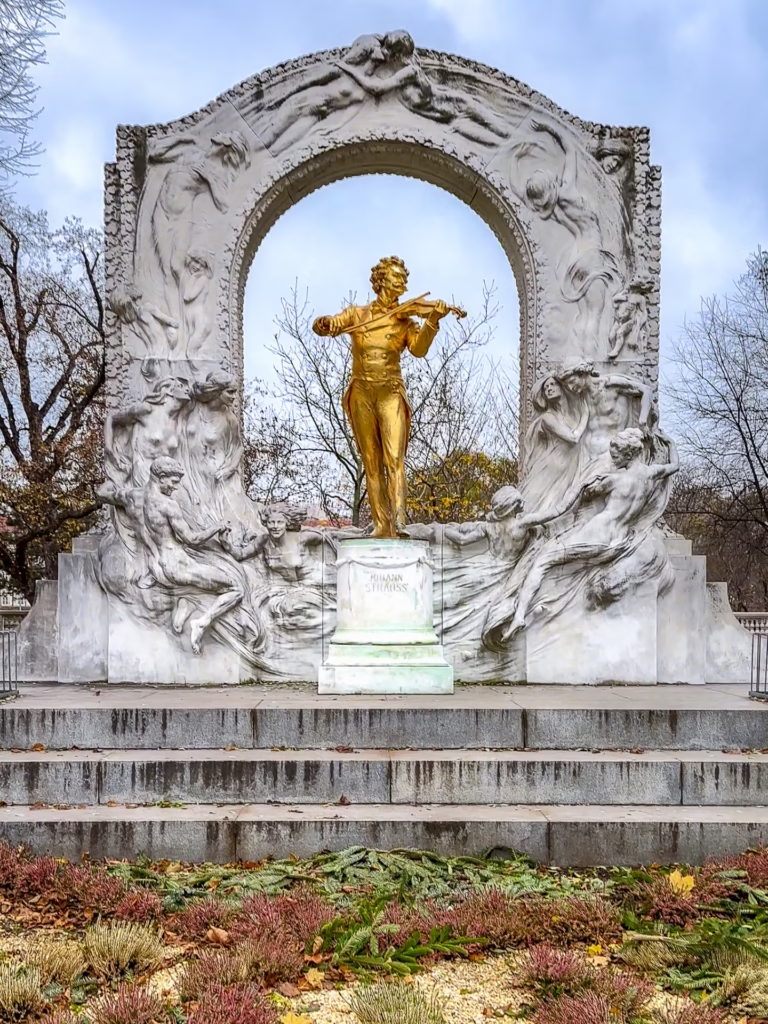
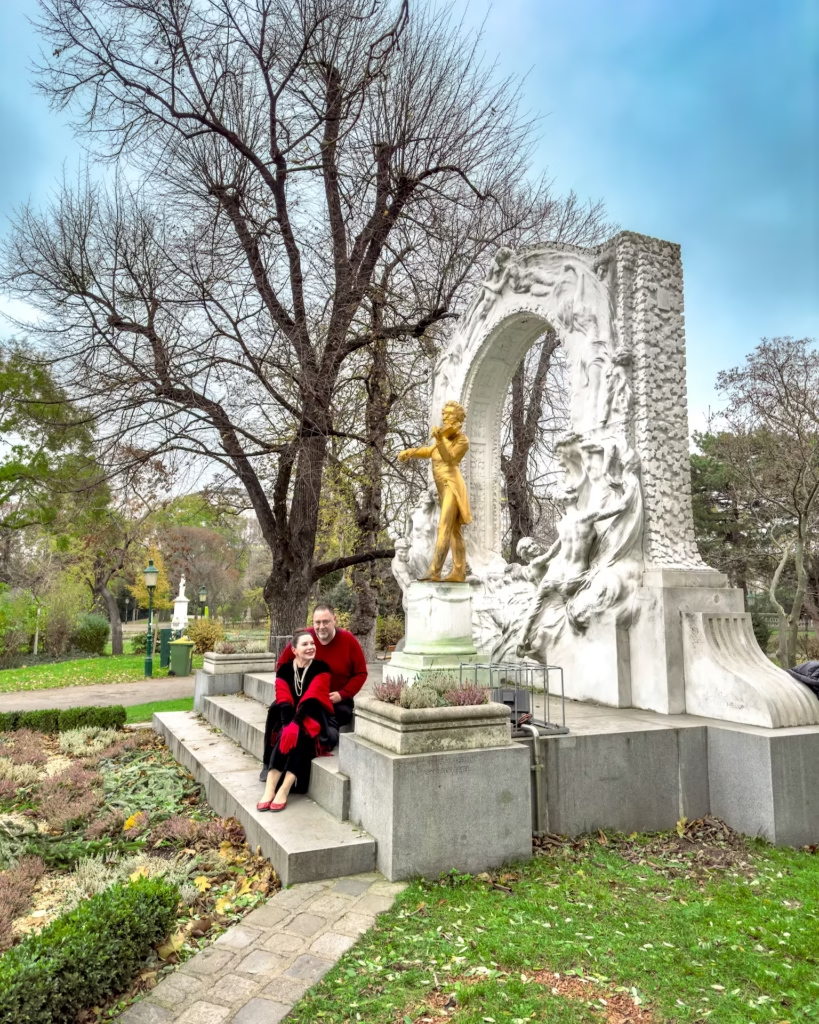
The Waltz King, Johann Strauss II, is eternally linked to Vienna. Likewise, his greatest hit, The Blue Danube, is inextricably intertwined with the Viennese waltz.
In 1921, the city of Vienna dedicated a bronze statue to the maestro in City Park (Stadtpark).
Over 100 years later, the golden Waltz King and his elaborate Art Nouveau arch is the number-one photograph in Vienna.
The highly instagrammable Strauss monument is but one of many reasons to visit Vienna City Park in winter, of course.
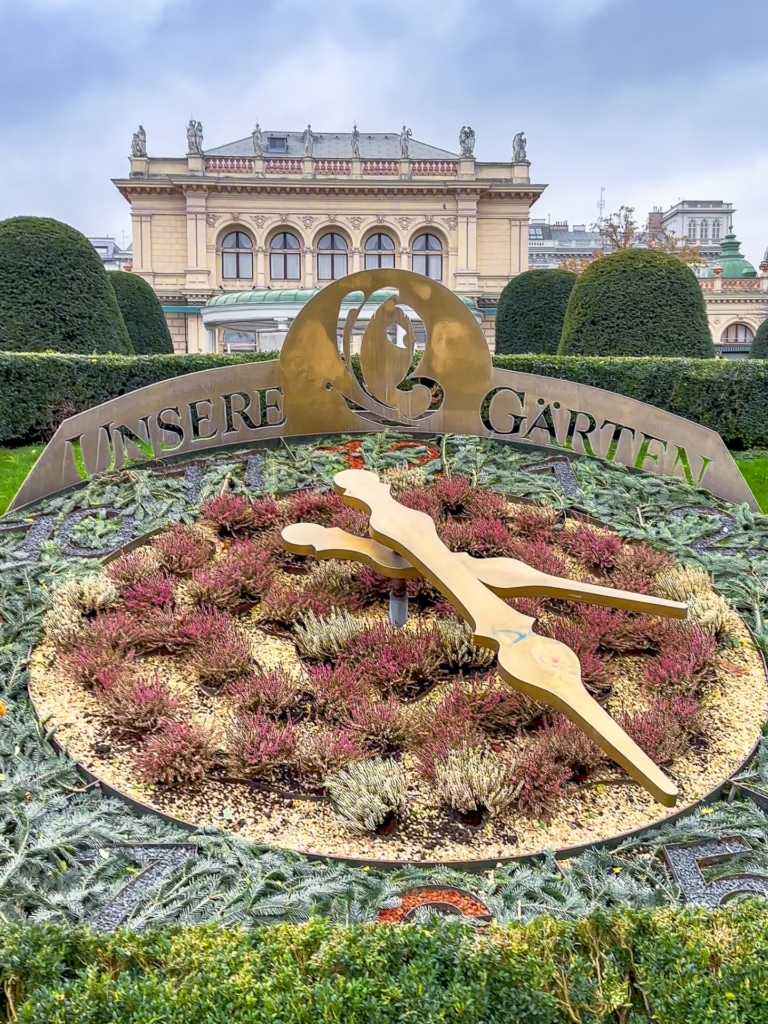
Ever since Stadtpark opened in 1962, Viennese and visitors alike have flocked here for walking paths, gardens, artwork, and the flower clock, Blumenuhr.
When exploring Stadtpark, look for the Espresso Mobil, a super cute espresso cart on wheels. The mobile full-service coffee cart usually parks by Blumenuhr.
Have a hot chocolate or an espresso drink made by the barista from EspressoMobil’s own Viennese roast coffee. Then toast your cold-weather adventures in Vienna!
Address: Vienna City Park (Stadtpark) | Parkring | 1010 Vienna, Austria to 1030 Vienna, Austria
Therme Wien Thermal Spa
Warm up and wind down in wintertime at Vienna’s thermal spa, Therme Wien. Located in the 11th District of Simmering, the Oberlaa natural spring feeds the thermal waters.
Therme Wien combines the traditional concept of European thermal spas with a contemporary approach to wellness, well-being, and fitness.
Indoor and outdoor pools, sauna and steam rooms, gym, and relaxation lounges invite you to refresh, renew, and recharge your senses.
Therme Wien welcomes not only adults but also families with children.
Family-friendly zones include water slides, an adventure pool with “wild water rapids,” and an indoor diving pool.
Address: Therme Wien Thermal Spa | Kurbadstrasse 14 | 1100 Vienna, Austria
Vienna Winter Travel Tips
Transportation Options for Vienna Winter
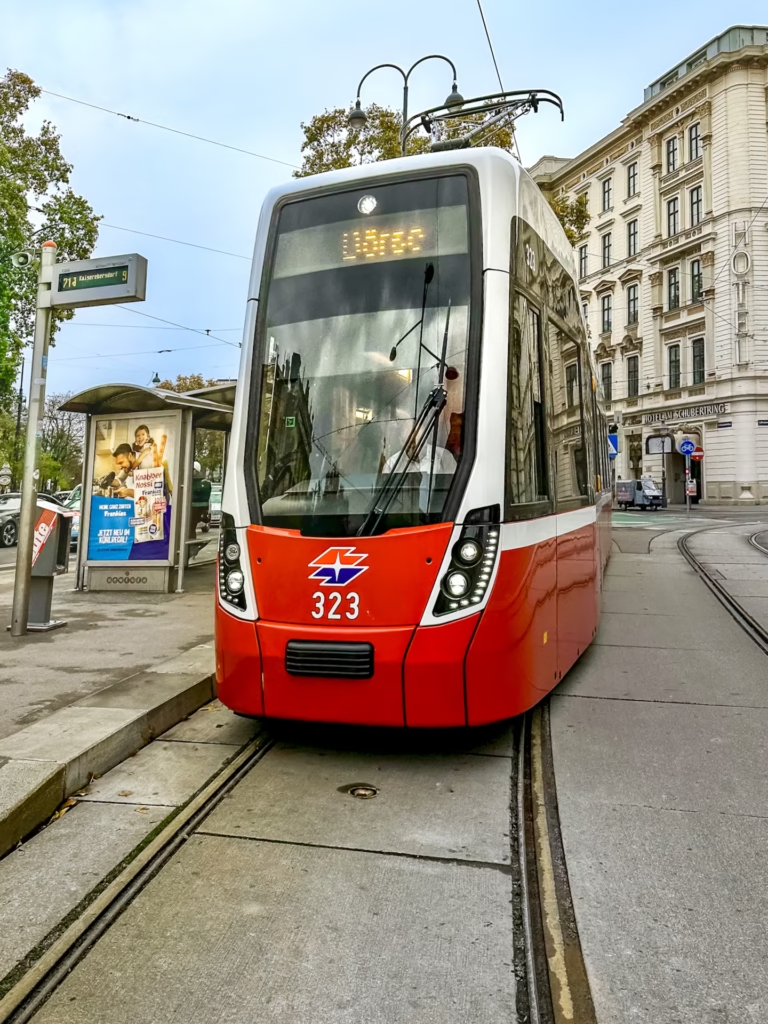
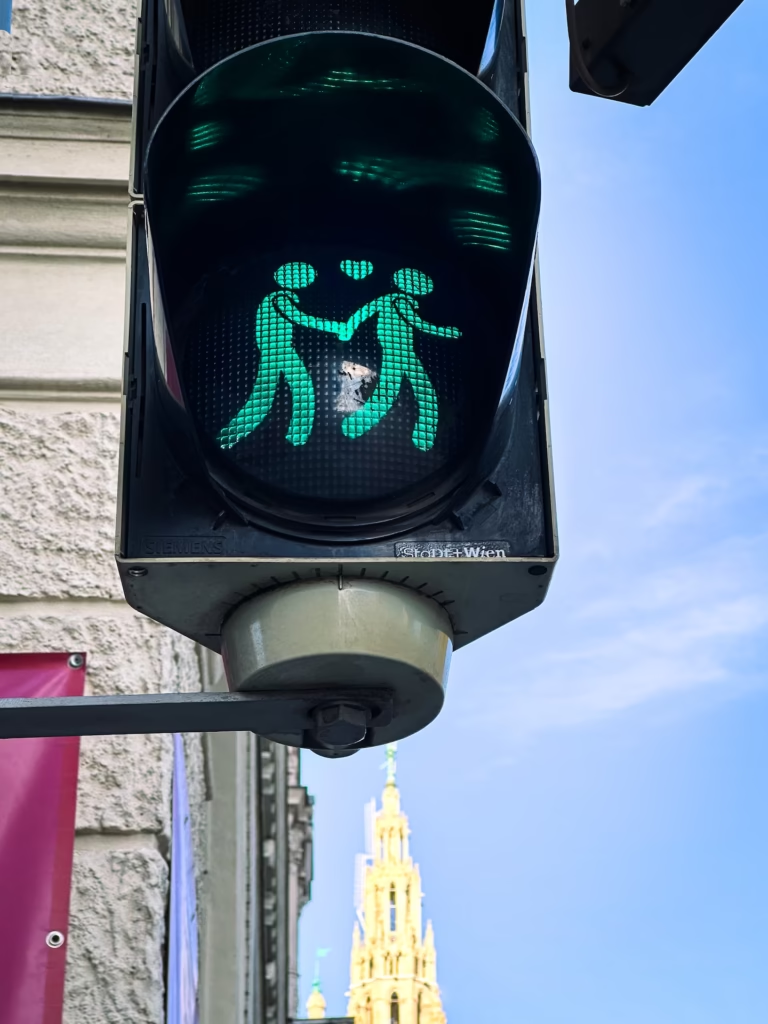
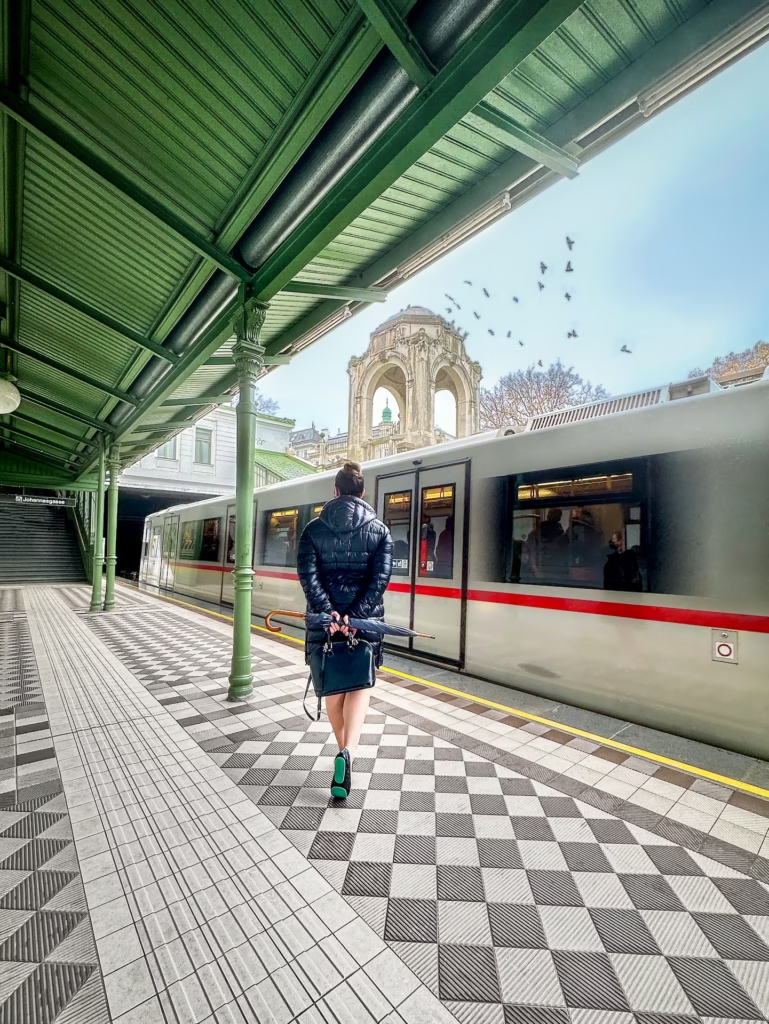
It’s quite easy to get around Vienna in every season, due to the efficient and reliable Vienna public transportation system.
It’s also rather comfortable, too, since vehicles are heated during the Vienna winter months.
The Vienna public transport network includes the following four types of transportation:
- Subway, the Untergrundbahn or U-Bahn.
- Local trains, the Schnellbahn or S-Bahn.
- Trams, the Stassenbahn.
- Buses, the Autobus.
Furthermore, the Vienna public transportation system is also extensive and comprehensive, covering:
- Vienna International Airport, VIE (Flughafen Wien-Schwechat).
- Vienna Main Train Station, Vienna Hbf (Wien Hauptbahnhof).
- Metropolitan Vienna from Innere Stadt, the 1st District, to Liesing, the 23rd District.
Private transfers, metered taxis, ride-sharing services, and car rentals offer additional transportation options.
Our Transportation Plan for Vienna Winter
When visiting Vienna, our own transportation plan begins and ends with two private airport transfers:
- Arrival day, a private transfer from Vienna Airport to the hotel.
- Departure day, a private transfer for the return trip to the airport.
Then, after checking in at the hotel, our transportation plan proceeds via the excellent public transportation. Using the award-winning Vienna City Card, of course.
Vienna City Card
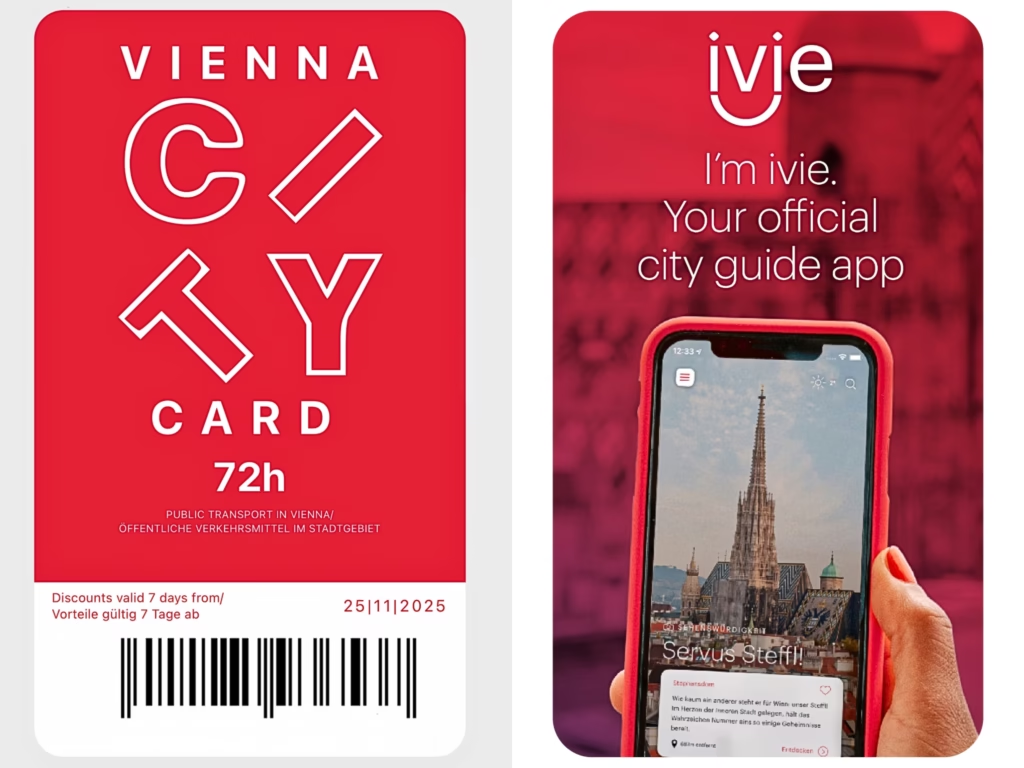
The award-winning Vienna City Card makes it easier, more efficient, and affordable to explore Vienna.
Vienna City Card is the one-and-done pass that puts the entire city at your fingertips.
The card offers convenience and value-added benefits such as:
- Unlimited free public transport for 24 hours, 48 hours, and 72 hours after activation.
- Hop-On Hop-Off city tour ticket for unlimited 24-hour use.
- Discounts to certain museums, attractions, and souvenir shopping.
- Special prices on food and beverages, as well as other benefits.
ivie app
The ivie app is the official free digital city guide featuring self-guided walks, sightseeing, maps, and lots of engaging content.
In short, the vie app is a friendly travel companion in Vienna. And also makes a nice complement to the Vienna City Card.
Download the free ivie app either via the App Store (“ivie – Vienna Guide”) or on the Vienna Tourist Board website.
Vienna Weather, November to March
The Vienna weather in November evokes late autumn on golden days and sunshine. Colder temperatures begin to prevail as November progresses to grey skies and rain.
December marks the official start of winter when the Winter Solstice occurs on December 21st, 2025.
The Vienna weather in December typically sees the most precipitation.
January is typically the coldest month in Vienna.
The weather in February tends to run a close second to January’s weather conditions.
March heralds the official start of spring when the Spring Equinox falls on March 20th, 2026.
Unlike historical Vienna weather patterns, the Vienna winter now tends to be drier and somewhat warmer than before. Daytime temperatures often hover above freezing. And overall, there are more rainy days than snowy days.
However, historical weather and forecasted weather compared to actual weather experiences have fluctuated widely and wildly in recent years.
For updated weather forecasts before and during your specific visit, the BBC Weather for Vienna, Austria, is a well-regarded resource.
Speaking of weather, let’s remember that Vienna Christmas Markets, Winter Markets, ice skating rinks, and other outdoor activities operate rain or shine or snow.
Still, weather and other conditions can result in unforeseen closures.
The current opening and closing schedules have been confirmed directly with the various event organizers. However, all dates and hours are subject to change without notice due to prevailing weather and other conditions.
What to Wear in Vienna in Winter
Once again, early winter in Vienna tends to be wet and rainy. Meanwhile, mid-to-late winter in Vienna is cold and occasionally snowy.
Yet the magical season of Vienna winter unfolds not only in the great outdoors but also in its elegant interiors.
The savvy winter traveler wishes to avoid feeling cold, soaked, and miserable. Or, for that matter, overly hot, stuffy, and miserable.
Planning ahead and packing appropriately for cold weather outside and warm rooms inside are essential winter travel safety tips.
And that’s why layers are key for savvy travelers like you. Now let’s chat about the best things to pack for your Vienna winter trip.
Vienna Winter Dress Code: Polished Layers
Firstly, put warm layered clothing on your packing list. Because whatever the weather outside, you’ll surely find things dry and warm inside.
Given that, it’s helpful to know the Viennese people tend to be quite chic and sophisticated, as befits their beautiful city.
Elegant cocktail and evening wear, formal clothes, and black-tie attire are fashion staples in Viennese closets.
Polished and warm layered clothing is thus the way to go.
Cashmere sweaters, for instance, are suitable and versatile layers for both women and men. Cashmere is easy to dress down during the day. And also easy to dress up at night.
Speaking of dressing up, you may wish to pack a ‘dress to impress’ outfit or two. Some restaurants and certain events, for instance, specify dress codes for all patrons, including out-of-town visitors.
Rest assured, if an unexpected situation arises requiring a ball gown or tuxedo, Vienna possesses many fine boutiques to fulfill any dress code emergencies.
Vienna Winter Outerwear
You’ll want to pack enough warm socks, ideally enough to wear a fresh pair daily. We recommend merino wool socks for lightweight yet significant warmth.
In addition, bring a warm winter coat or parka jacket, as well as waterproof shoes or winter boots.
Vienna Winter Accessories
Additionally, you’ll want to pack a scarf, gloves, sunglasses, and sunscreen. Because sunscreen is important at all times, even in bad weather.
Oh yes, and a cozy hat or cute earmuffs are handy to have and helpful to wear.
Lastly, a sturdy foldable travel umbrella is always a good idea for Vienna in winter. Or, for that matter, pretty much anywhere in any season.
But if there’s no room left in your suitcase or tote bag, that’s OK. A good hotel often offers courtesy umbrellas to its guests. Check with the front desk or valet station.
Vienna Winter in Conclusion
Come fall in love with Vienna in winter, when the historic and romantic Austrian capital city offers so much to do, see, and celebrate.
Fall in love with Vienna winter, when this vibrant city glows with a touch of fairytale sparkle, fanciful shimmer, and festive shine.
So, yes, come visit Vienna in winter. Whether November through December, or January through March of the new year. Whether there’s a snowy white Christmas or rainy grey skies.
Come explore, experience, and be inspired by this resplendent city in winter’s storybook setting.
Because Vienna in winter is a magical season. It’s a perfect time to visit Vienna now.
•••
Interactive Vienna Map with Attractions
Vienna Winter Sources and Resources
Christmas in Vienna. Directed by Maclain Nelson, starring Sarah Drew and Brennan Elliott, Hallmark, 2020.
Cockett, Richard, Vienna: How the City of Ideas Created the Modern World. Yale University Press, 2024.
Goldstone, Nancy, The Rebel Empresses: Elisabeth of Austria and Eugnie of France, Power and Glamour in the Struggle for Europe. Little, Brown, and Company, 2025.
Hamann, Brigitte, The Reluctant Empress: A Biography of Empress Elisabeth of Austria. Faber and Faber, 2011.
Michelin, Streetwise Vienna Map: Laminated City Center Street Map of Vienna, Austria. Michelin Streetwise Maps, 2023.
Rady, Martyn, The Habsburgs: The Rise and Fall of a World Power. Penguin Books Ltd., 2022.
Rosetta Stone, German Language Instruction Software: Learn Unlimited Languages with Lifetime Access. Rosetta Stone, 2019.
Check Out More Recommendations
GET: Now that you’re ready for a magical Vienna winter trip, get your exclusive free storytelling guide to tell your travel stories easily.
•••
Vienna Winter FAQs
How many days to visit Vienna?
A 3-day / 2-night stay at least allows visitors to visit some Vienna tourist attractions such as museums, palaces, churches, and cafes; attend a concert; and/or see some beautiful city sights.
Does it snow in Vienna in December?
In recent years, Vienna winter weather in December has been dry and cold with daytime temperatures generally above freezing. While snowy days are less frequent than in the past, occasionally Vienna still gets some snow during December.
What to do in the Vienna winter?
Wonderful things to do during Vienna winter include winter activities such as Christmas Markets, winter sports like ice skating, and classical music concerts. Museums, palaces, the Prater Amusement Park and other main attractions are open during winter.
Does Vienna have Christmas markets?
Vienna has many Christmas markets, making Vienna winter a magical season. Viennese holiday traditions date back centuries, being that Vienna ranks among the three oldest Christmas markets in Europe.
What to wear in Vienna in February?
February is one of the colder months in Vienna. So pack warm layers to wear in the Vienna winter such as sweaters, turtlenecks, merino socks, waterproof or winter boots, and a winter coat or parka. Bring a scarf, gloves or mittens, and a warm hat or ear muffs. Also pack a foldable travel umbrella.
Is Vienna good to visit in January?
Vienna winter is a magical season, so January is a good time to visit Vienna. The Austrians have a rich history of winter traditions, winter activities, and winter sports. So bundle up in warm layers. Take breaks in Viennese cafes to warm up over coffee or hot chocolate. And have a great Vienna winter trip.

All opinions expressed are Spotlight Sojourns’ own. All content and images are original, created with care and craft by yours truly, Marilee Kostadimas, the writer and Paul Kostadimas, the photographer, except where noted.
Hi! We're Marilee and Paul
Slow travel stories and hidden gems with the Hidden Gemologists®
Original travel guides and original photography exploring the culture, history, and backroads of Greece, Europe, and North America.
It’s all original, created with care and craft by yours truly, writer Marilee and photographer Paul, from our lived experience and firsthand perspective.
Our mission: Connect you with wonderful places, delightful hotels, cultural experiences, and local communities. Our purpose: Inspire you to tell your travel story.
Because slow travel is meaningful travel, part of a meaningful life. And stories enrich the meaning.
Get travel inspo!
Subscribe to our weekly newsletter and join our global community of slow travelers and travel dreamers.
It's a quick 1-2 minute read with slow travel stories, hidden gems, travel tips, recommendations, and conversations.
"Don't call it a newsletter! It's not a newsletter." "It’s the only email l really read and enjoy."