
By Marilee Kostadimas • Photos by Paul Kostadimas
Last Updated: November 17, 2026
Portugal Christmas traditions resonate through the ages, from the distant past to the present day. Blending cultural heritage and meaningful celebrations, Christmas in Portugal is a time of wonder and joy.
Paul and I (Marilee) refer to Advent, Christmas, and New Year holidays as “the joyful season.” Over the years, slow travel in the joyful season has become our own treasured Christmas tradition.
So, we’d like to share with you some of our favorite Christmas traditions and experiences in Portugal, this rare and remarkable country forever written in our travel story.
Ready? Vamos, let’s go!
When you book or purchase through some links, Spotlight Sojourns may earn a small commission at no extra cost to you. Thanks for using our affiliate links!
Portugal Christmas Traditions: The Foundations
Through the ages, Christmas traditions in Portugal (Tradições de Natal em Portugal) build on the eternal foundation of faith and family.
Christmas in Portugal (Natal em Portugal) both commemorates the sacred birth of Jesus Christ, and also celebrates the essential importance of family.
Throughout Portugal, the omnipresent Nativity scenes (Presépios) express these two essential, fundamental themes.
Keep an eye out, and you may notice Presépios everywhere. They’re not only in churches and churchyards, of course, but also in unexpected places such as traffic roundabouts.
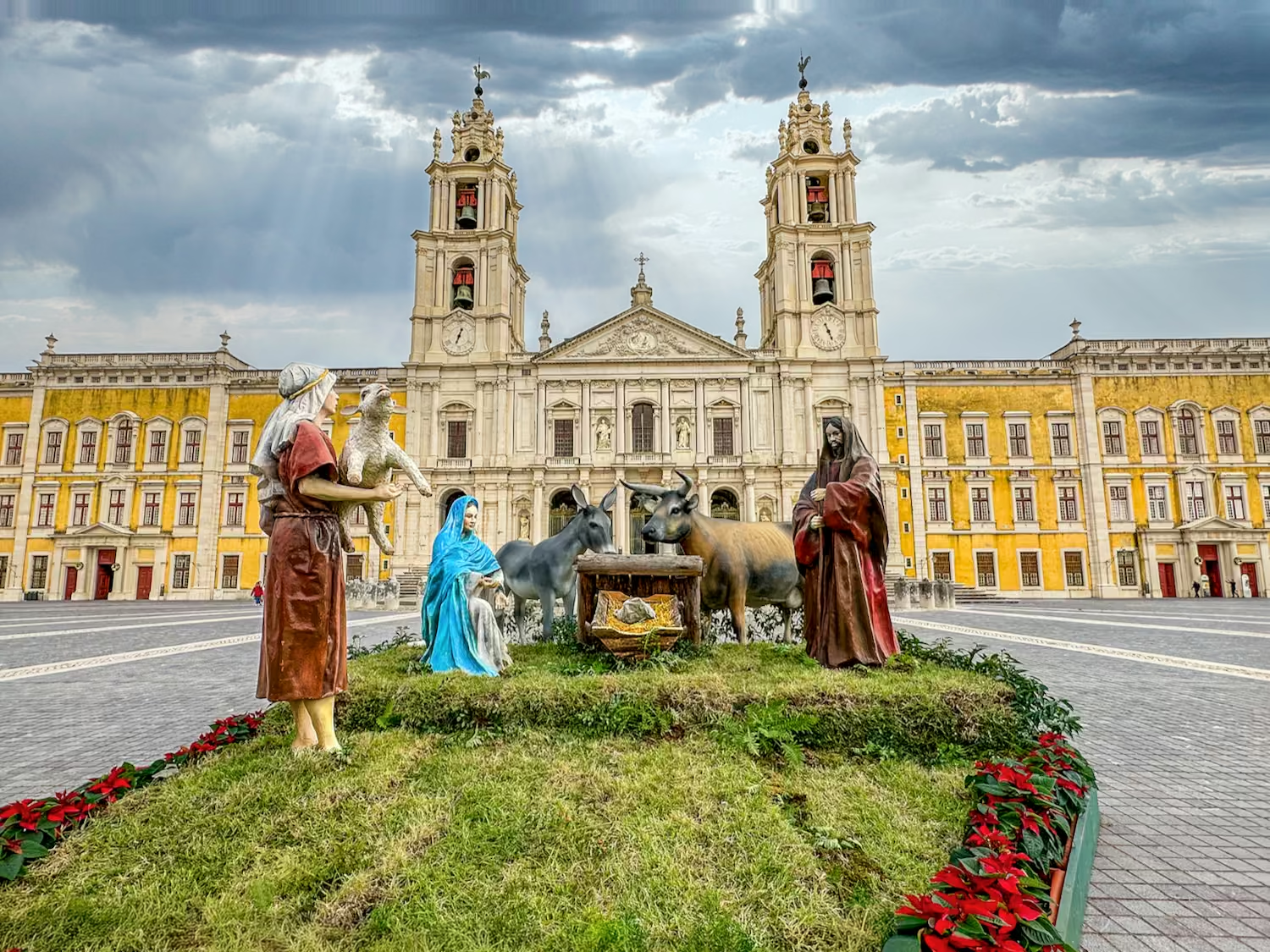
Perhaps my personal favorite is the Presépio at the Royal Building of Mafra, a UNESCO World Heritage Site.
This life-size, full-color Nativity scene centers the vast courtyard of monumental Mafra National Palace.
The simple Nativity story of faith, hope, and love unfolds against the spectacular palace architecture.
From our wholeheartedly human perspective, this sweet sacred scene uplifts the spirit before entering the sublime Basilica.
Later, when departing the Basilica, we smiled to see a group of students gather for their field-trip photo in front of the Presépio.
Portugal Christmas Traditions: Festive Events
Christmas Markets

Portuguese Christmas Market traditions are newer than, for instance, Dresden or Vienna Christmas Market traditions.
Still, the Christmas Markets in Lisbon and elsewhere in Portugal share similar elements with their historic German and Austrian counterparts.
For example, fine handicrafts, holiday food and drinks, family-friendly activities, and generally free admission. And, of course, happy people.
Portugal is a country of artists and artisans creating arts and crafts in the time-honored manner. In other words, by human hands.
So, quaint wooden market stalls at Portugal Christmas Markets showcase their hand-crafted toys, hand-made gifts, and hand-knit textiles.
Food stalls offer Portuguese favorite foods and drinks for purchase.
There may be a Ferris wheel and a lovely little carousel or toddler-size rides. Live musicians, cultural groups, and Father Christmas (Pai Natal) may also make special appearances.
There’s even an outdoor artificial ice skating rink at the premier Portuguese Christmas event, Wonderland Lisboa.
Christmas Lights and Christmas Trees
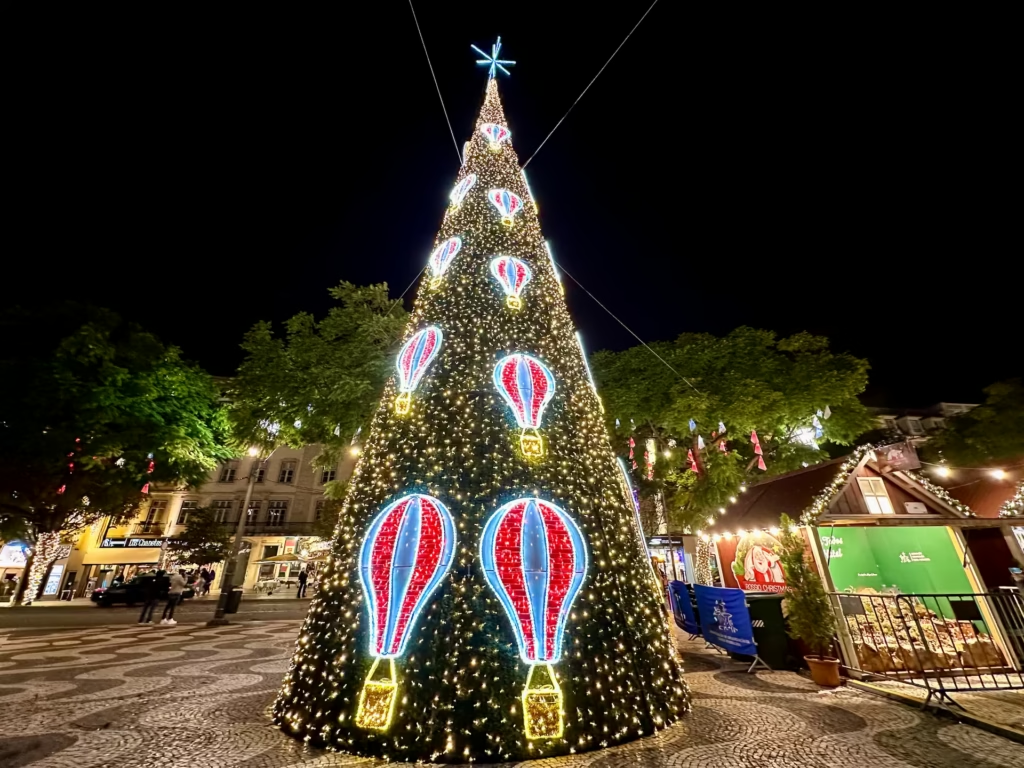
At this time of year, when the Winter Solstice (Solstício de Inverno) brings long winter nights, Christmas decorations sparkle and shine with hope and glory.
Awe-inspiring Christmas lights and enchanting Christmas trees adorn private homes and public spaces alike throughout Portugal.
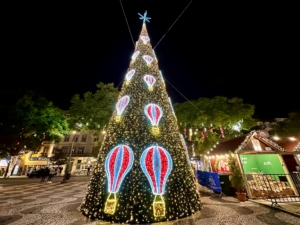
Lisbon, the capital, and Porto, Portugal’s second-largest city, feature spectacular holiday lights and sights. Not to mention, the impressively immense Lisbon Christmas Tree.
Yet small towns and villages such as Fatima and Ericeira sparkle and shine with hope and glory, too.
Indeed, the medieval village of Obidos is beloved for its beautiful Christmas displays and decorations.
During our last joyful season in Portugal, we took a day trip to Obidos specifically for the magical Christmas experience.
Surprisingly, we managed to find a parking space just outside the historic Obidos castle walls.
Obidos merrily overflowed with multi-generational Portuguese families celebrating a sunny Advent Sunday. ‘Twas a wonderful day in the most wonderful time of the year!
Portugal Christmas Traditions: Culinary Celebrations
Portuguese traditions of gastronomy and hospitality create Christmas menus and meals of abundant good taste.
This abundant good taste entails not only robust flavors and hearty servings but also delicate nuances and delectable bites.
Portuguese traditions of gastronomy and hospitality create Christmas menus and meals of abundant good taste.
This abundant good taste entails not only robust flavors and hearty servings but also delicate nuances and delectable bites.
Whether sweet or savory, traditional Portuguese food carries on a true culinary legacy to celebrate Christmas in authentic and delicious ways..
Breakfast and Sweet Treats

Beginning with breakfast, and for that matter, dessert, traditional sweets tempt everyone’s sweet tooth.
Rabanadas or Golden Slices (Fatias Dourados) are French toast with a Portuguese twist.
With a crispy fried exterior and a creamy custard interior, a stale baguette suddenly becomes a Christmas dessert. Bread that’s one or two days old gives more consistency and cohesion in preparation.
Lightly infused with cinnamon, soaked in milk and sugar, then finished with a little Portuguese wine, either Tinto or Port, the not-quite French toast Rabanada is a sweet sensation.
Additional traditional treats address the breakfast-or-dessert conundrum.
For instance: Portugal’s world-famous egg custard tarts (Pastéis de Nata).
Deep-fried balls (Sonhos Fritos), dipped in cinnamon and sugar, may look rather like Rabanadas; however, these fritters are prepared with fresh bread.
Lastly, rice pudding (Arroz Duce) is made with egg yolks for a thick, creamy texture and then topped with cinnamon.
What’s the perfect finishing touch to all this yumminess? In our opinion, the answer obviously is: Coffee.
Two traditional Portuguese coffees are a shot of espresso (um Café everywhere except Lisbon, where it’s uma Bica) and a cup of half coffee, half milk (uma Meia de Leite).
Christmas Eve Dinner
Next, let’s move on to Christmas Eve and Christmas dinners. For these important gatherings, traditional dishes remain the rule for chefs in the top hotels and best restaurants, as well as cooks at home.
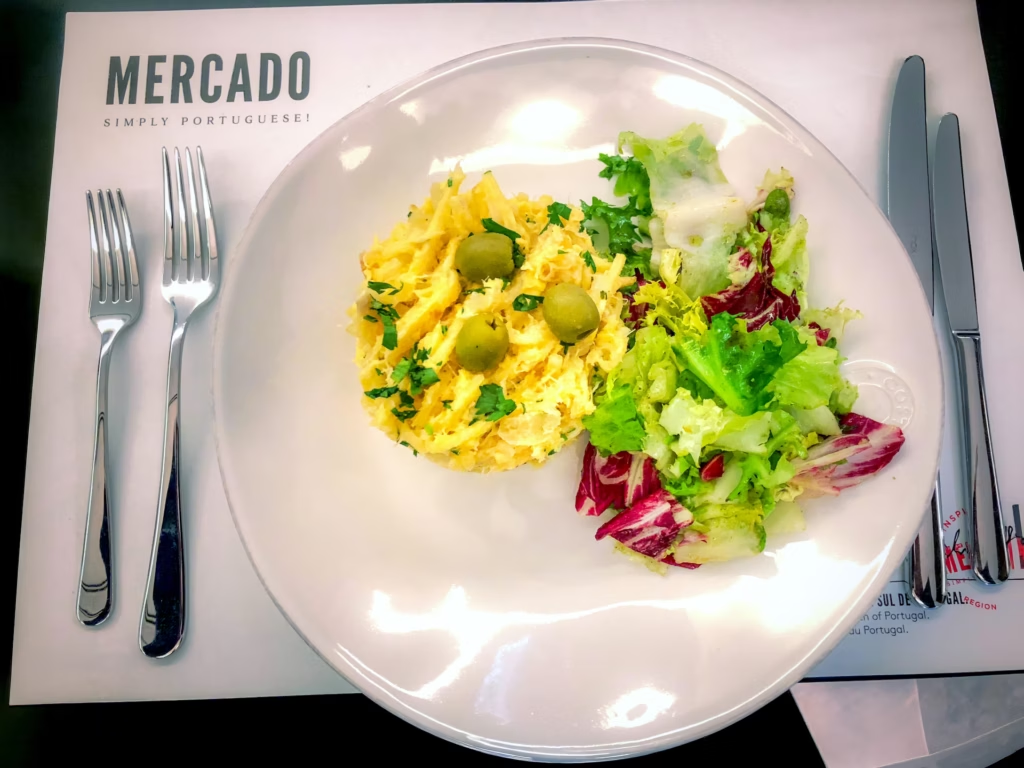
The timeless star of Christmas Eve is the national dish of codfish. Indeed, it’s codfish with everything (Bacalhau com Todos).
The classic entree preparation is a simple salted cod filet (Bacalhau da Consoada), either baked or boiled, then drizzled with olive oil.
Boiled potatoes and cabbage accompany the bacalhau entree, thus completing the traditional Christmas Eve dinner.
Christmas Day Meals
The following day, any codfish leftovers from Christmas Eve (Roupa Velha) are refreshed and served again at Christmas lunch.
For Christmas dinner, meats take center stage; for example, roasted turkey (Peru), marinated goat (Cabrito), or lamb (Borrego).
Fine Portuguese wine, liqueurs, and a beautifully set table finish the family feast.
Finally, the king cake (Bolo Rei) and queen cake (Bolo Rainha) reign supreme over Christmas dinner.
Round like a Christmas wreath, the king cake is stuffed with dried fruits and nuts and then crowned with candied fruits.
The queen cake features a similar round shape and fully loaded interior as bolo rei. Delicate almonds instead of candied fruit then crown the bolo rainha.
Portugal Christmas Traditions: Faith and Family
Century after century of steadfast Portuguese faith and stalwart Catholic customs make Christmas in Portugal a religious and cultural celebration for everyone, devout or otherwise, to enjoy.
The Portuguese people frame Christmas and New Year celebrations around faith and family in this markedly Roman Catholic country.
Despite the emergence of secular aspects, the principal meaning of Jesus’ birth and the family’s importance endure in Portugal Christmas traditions.
The authentic traditions appear throughout the Christmas season and Christmastide ending on January 6th, Epiphany Day (Dia da Epifania do Senhor).
Midnight Mass, the Rooster Mass
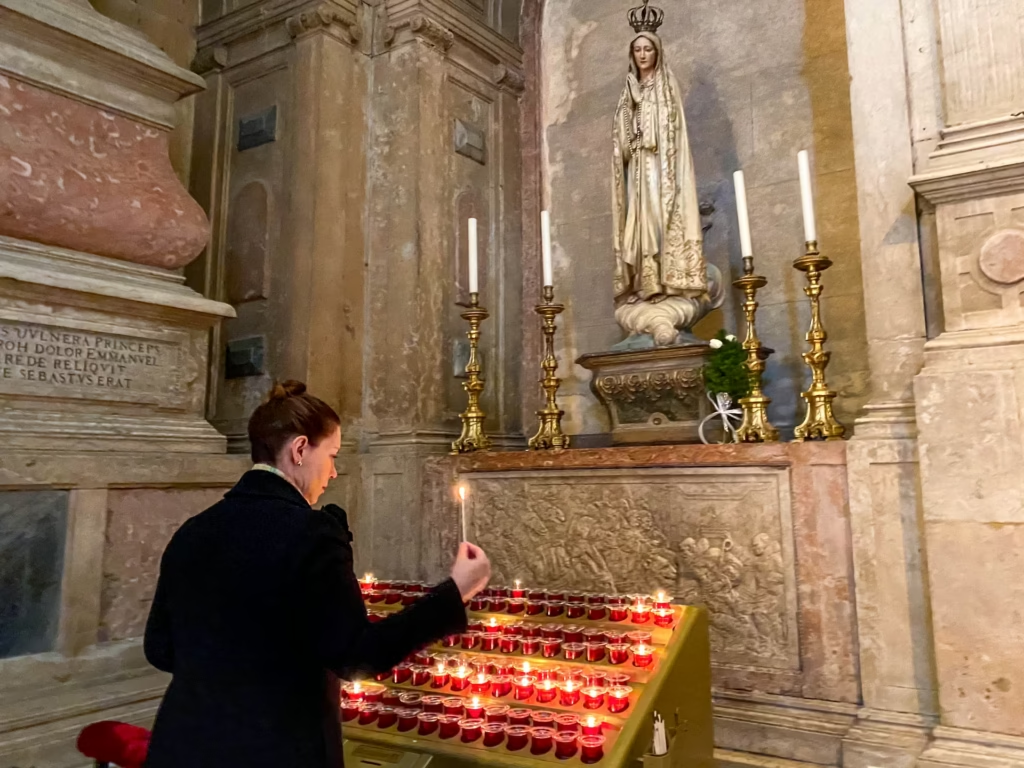
One church service when surely every pew is full is Midnight Mass or the Rooster’s Mass (Missa da Galo).
The Rooster’s Mass title references the only time when roosters crowed at midnight, rather than at dawn, on the night that Baby Jesus was born.
The worship service begins before midnight on Christmas Eve, December 24th, and welcomes the first joyful hour of Christmas Day December 25th.
In some church courtyards and public squares, custodians of Portuguese culture still observe the centuries-old custom of building Christmas bonfires (os Madeiros do Natal or Lenhos do Natal).
Locals and visitors gather around these roaring wood bonfires to meet and wish one another Merry Christmas (Feliz Natal).
One such community is Braga, a metropolis both modern and ancient. It’s home to the Sanctuary of Bom Jesus do Monte, a UNESCO World Heritage Site and pilgrimage destination in Northern Portugal.
This important urban center of religion, arts, culture, and contemporary life builds the bonfire (a fogueira) and upholds other historic Portuguese Christmas traditions.
Braga ranks among our most memorable places in Northern Portugal. We’d love to experience Braga’s Christmas bonfire tradition. As well as Europe’s largest living Nativity scene in nearby Priscos village.
Opening Presents
Ancient tradition holds, for instance, that the Holy Child Jesus brings Christmas gifts to little children.
Nowadays, Father Christmas (Pai Natal) or Santa Claus often receives credit for bringing gifts to young ones.
In any case, Portuguese families traditionally exchange their Christmas gifts either before the Rooster’s Mass on Christmas Eve or afterward on Christmas Day.
Portugal Christmas Traditions: Season’s Greetings
It’s customary for the Portuguese, and indeed appropriate for cultural travelers, to greet everyone with the traditional salutation, Merry Christmas (Feliz Natal).
However, if you wish to use the alternative greeting when traveling in Portugal, it’s Happy Holidays (Boas Festas).
Now, to conclude our favorite Christmas traditions in Portugal, Paul and I wish Merry Christmas and Happy New Year (Feliz Natal e Feliz Novo) to you and yours!
FAQs
What are the most important Portugal Christmas traditions?
The most important Portugal Christmas traditions center around faith and family. Nativity scenes, church services, and religious observances still play an essential role in Portuguese life. Christmas events, excursions, meals, and time together emphasize the family’s central place in Portuguese culture.
What is the traditional Christmas Eve dinner in Portugal?
The traditional Christmas Eve dinner in Portugal is salted codfish with olive oil. Boiled potatoes and cabbage are the classic side dishes.
What is Missa do Galo in Portugal?
Missa do Galo means the Rooster’s Mass, i.e, the Midnight Mass worship service starting late Christmas Eve and ending the first hour of Christmas Day. The Rooster’s Mass recalls the tradition that a rooster crowed at midnight, heralding the birth of Baby Jesus.
When are Christmas lights and decorations put up in Portugal?
Portuguese families traditionally put up Christmas lights and decorations during Advent, that is, the four Sundays before Christmas Day. In recent years with growing trends to start the holidays earlier, Christmas decor tends to go up in mid-November.
Sources and Resources
Carreira, Leandro. Portugal: The Cookbook. Phaidon Press, 2022.
“Christmas.” visitportugal.com, Turismo de Portugal official website. Accessed November 12, 2026.
Haljuci, Rusha. “Q&A: Portugal for the Holidays.” The New York Times, October 28, 2010.
•••
Check Out More Recommendations


GET: Now that you’ve learned some wonderful Christmas traditions in Portugal, get our exclusive free storytelling guide! Our step-by-step guide helps you easily tell your travel story.

All opinions expressed are Spotlight Sojourns’ own. All content and images are original, created with care and craft by yours truly, Marilee Kostadimas, the writer and Paul Kostadimas, the photographer, except where noted.
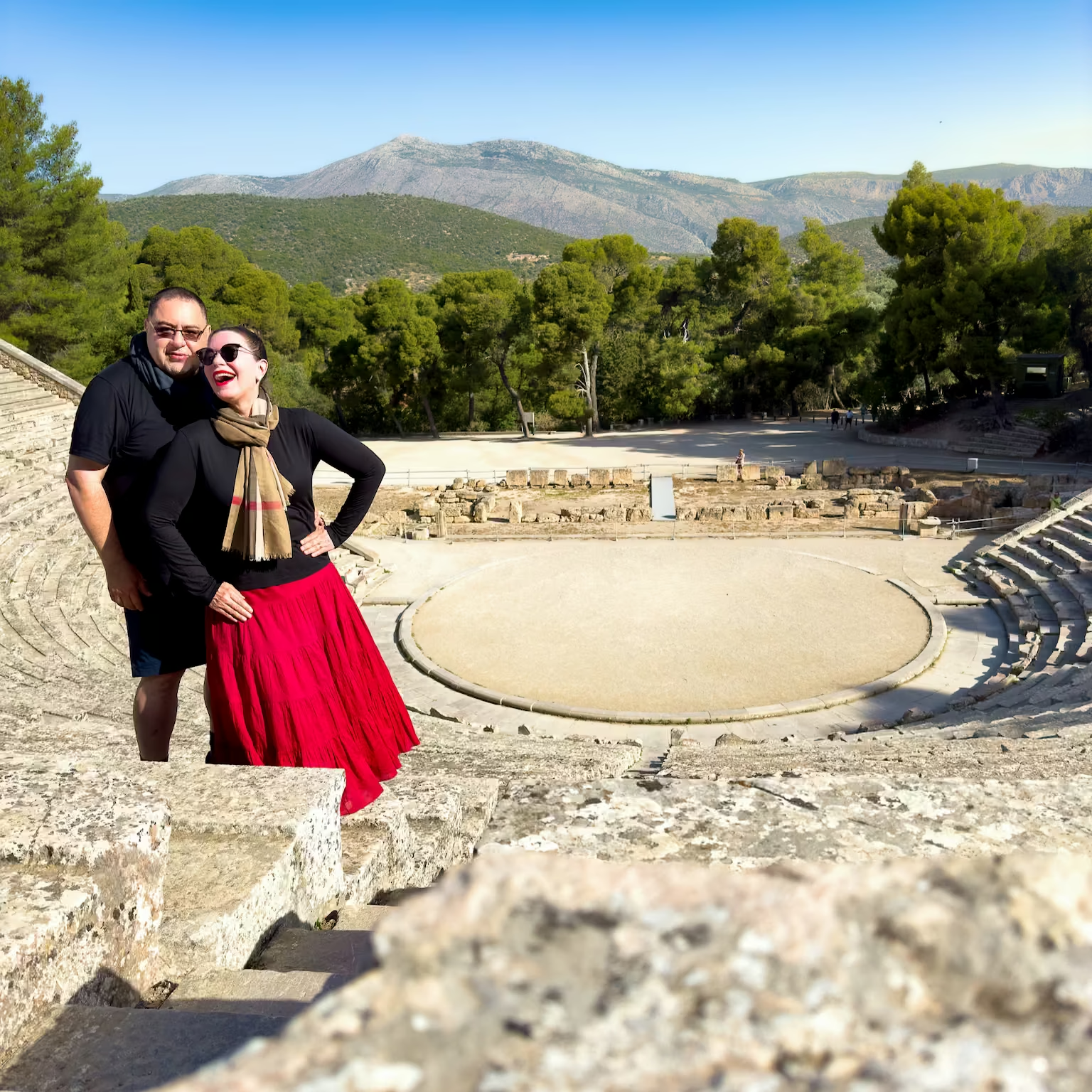
Hi! We're Marilee and Paul
Slow travel stories and hidden gems with the Hidden Gemologists®
Original travel guides and original photography exploring the culture, history, and backroads of Greece, Europe, and North America.
It’s all original, created with care and craft by yours truly, writer Marilee and photographer Paul, from our lived experience and firsthand perspective.
Our mission: Connect you with wonderful places, delightful hotels, cultural experiences, and local communities. Our purpose: Inspire you to tell your travel story.
Because slow travel is meaningful travel, part of a meaningful life. And stories enrich the meaning.
Get travel inspo!
Subscribe to our weekly newsletter and join our global community of slow travelers and travel dreamers.
It's a quick 1-2 minute read with slow travel stories, hidden gems, travel tips, recommendations, and conversations.
"Don't call it a newsletter! It's not a newsletter." "It’s the only email l really read and enjoy."